










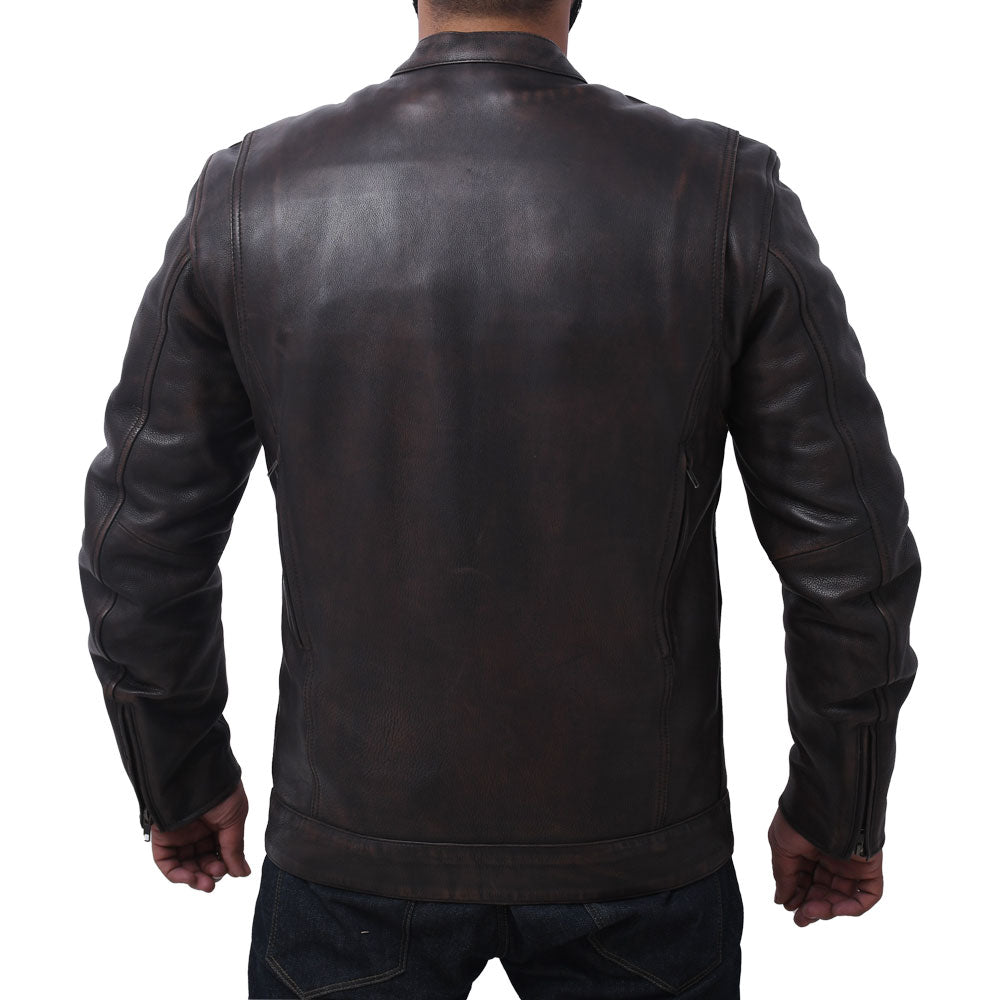
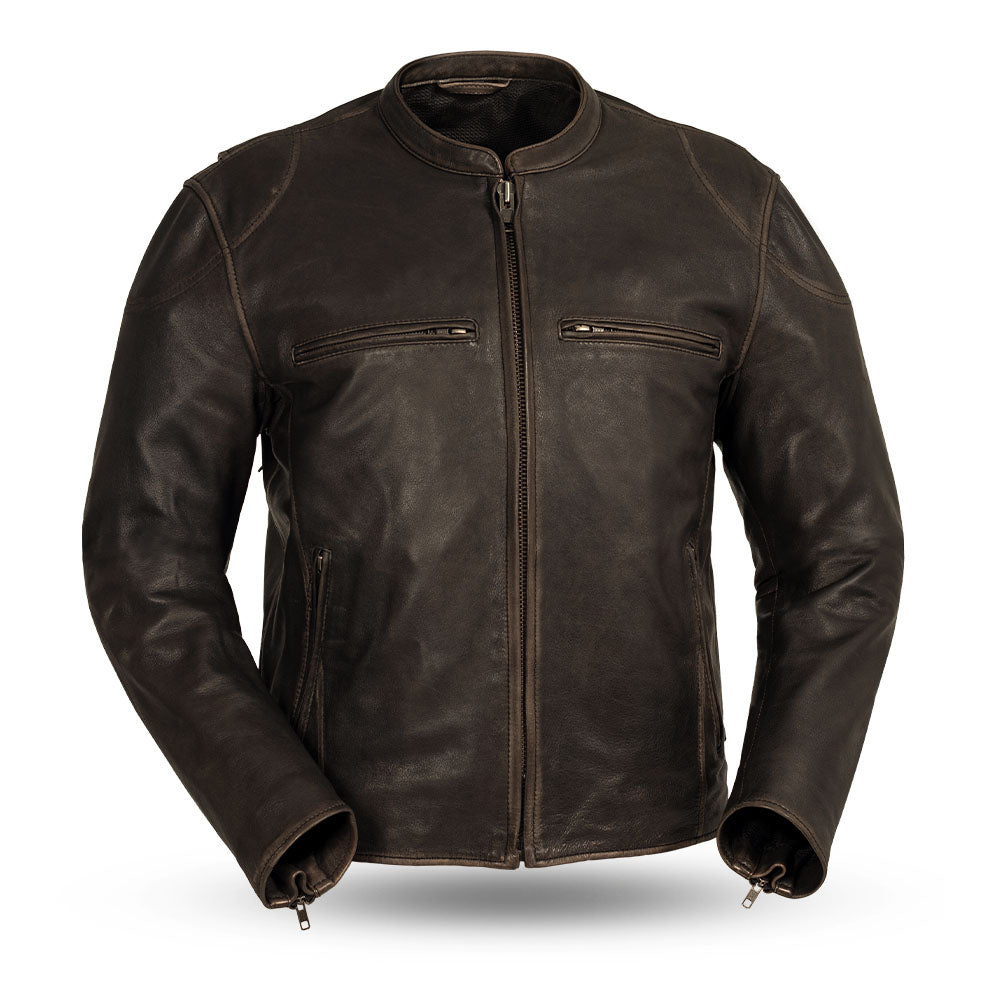

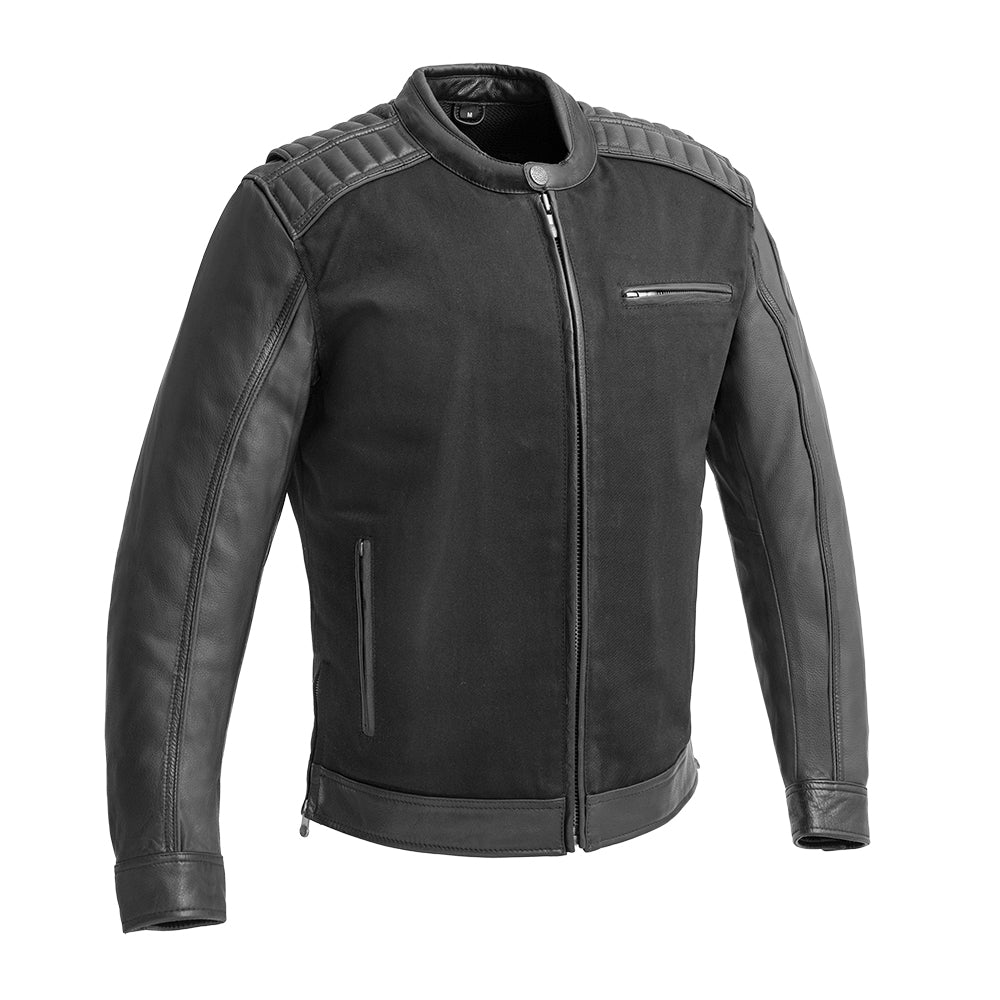

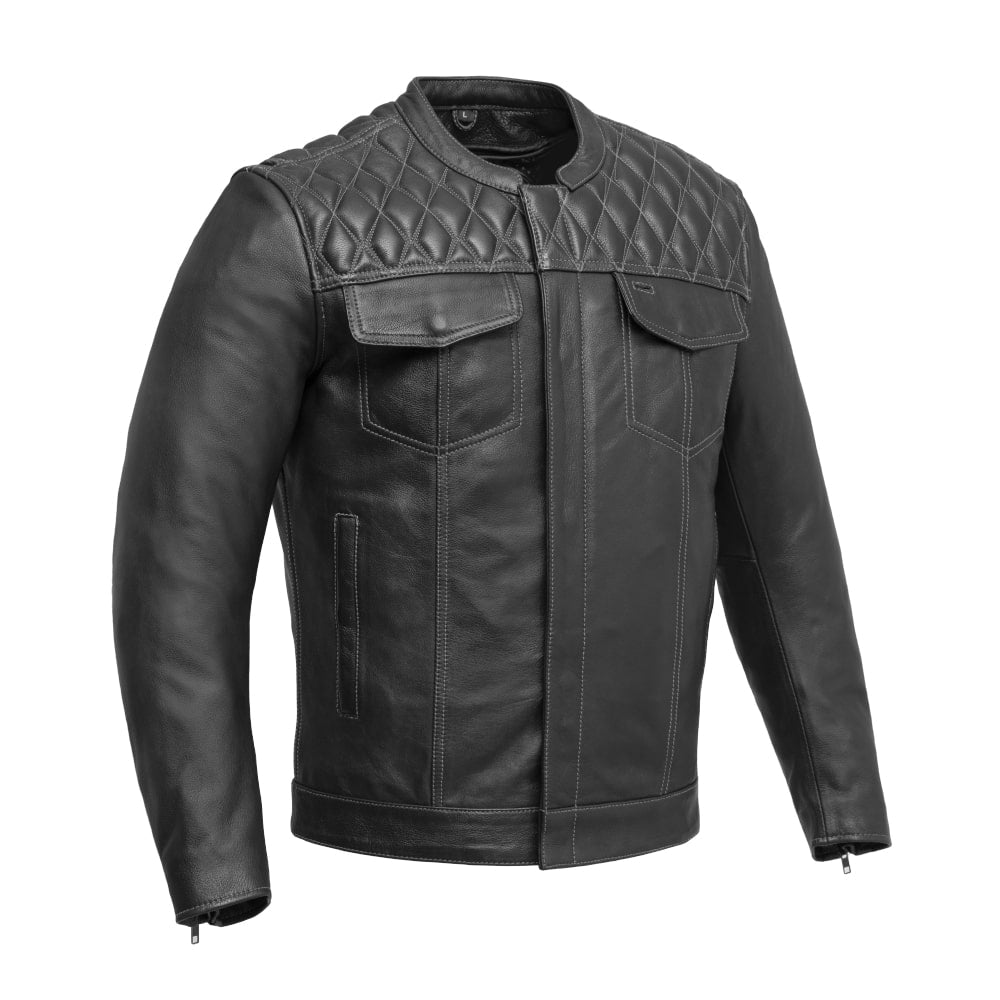
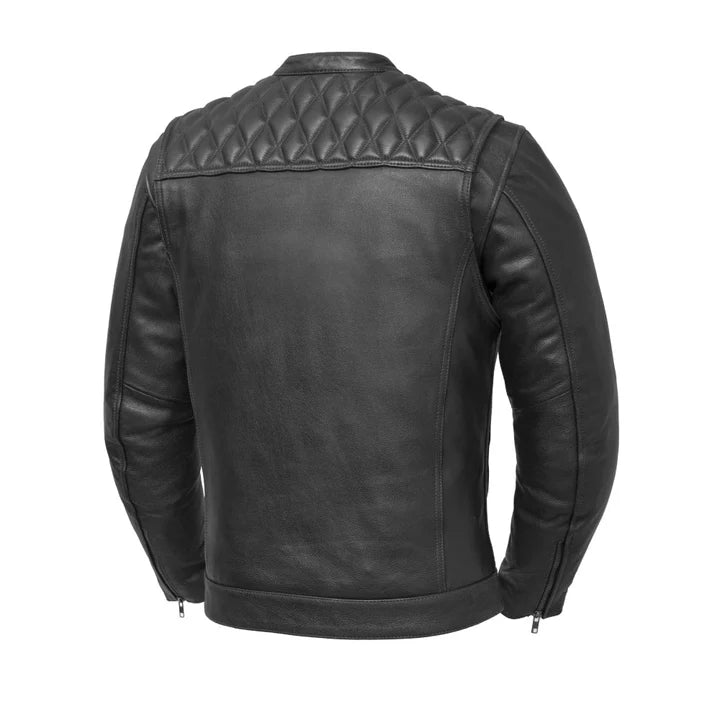
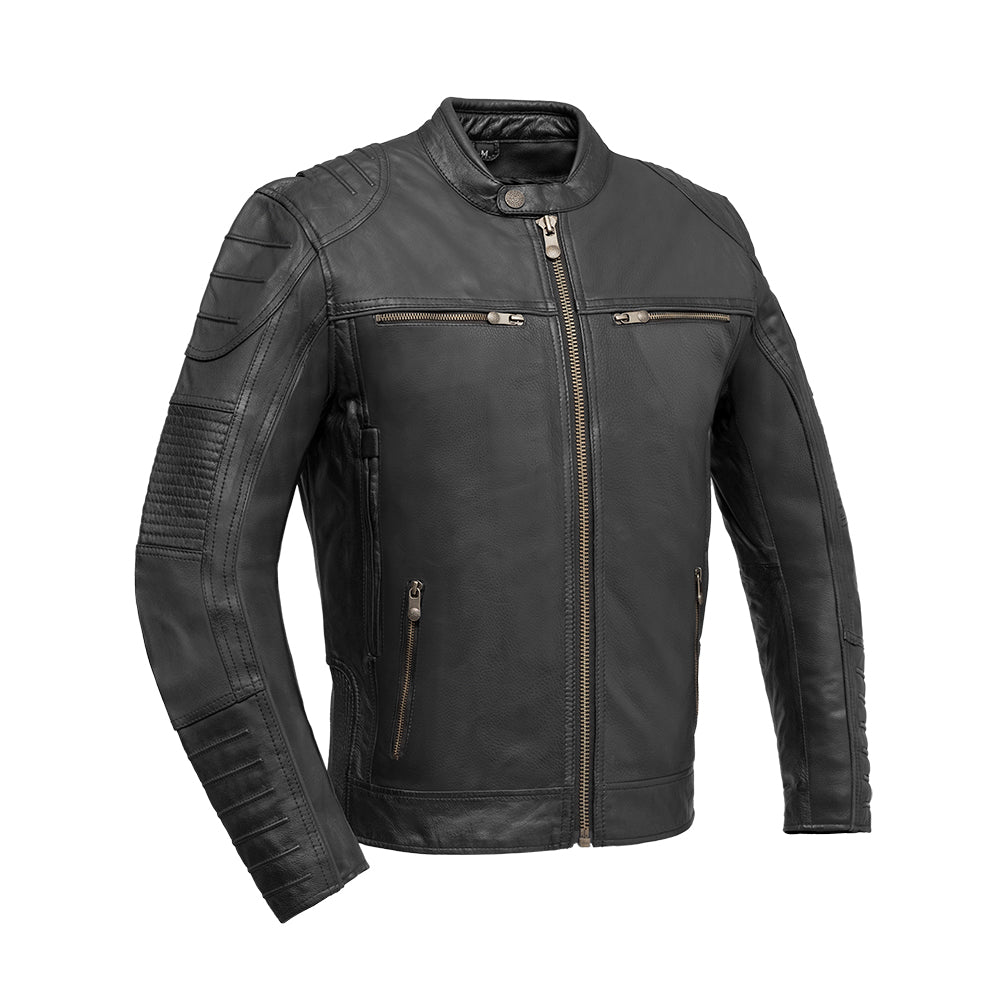
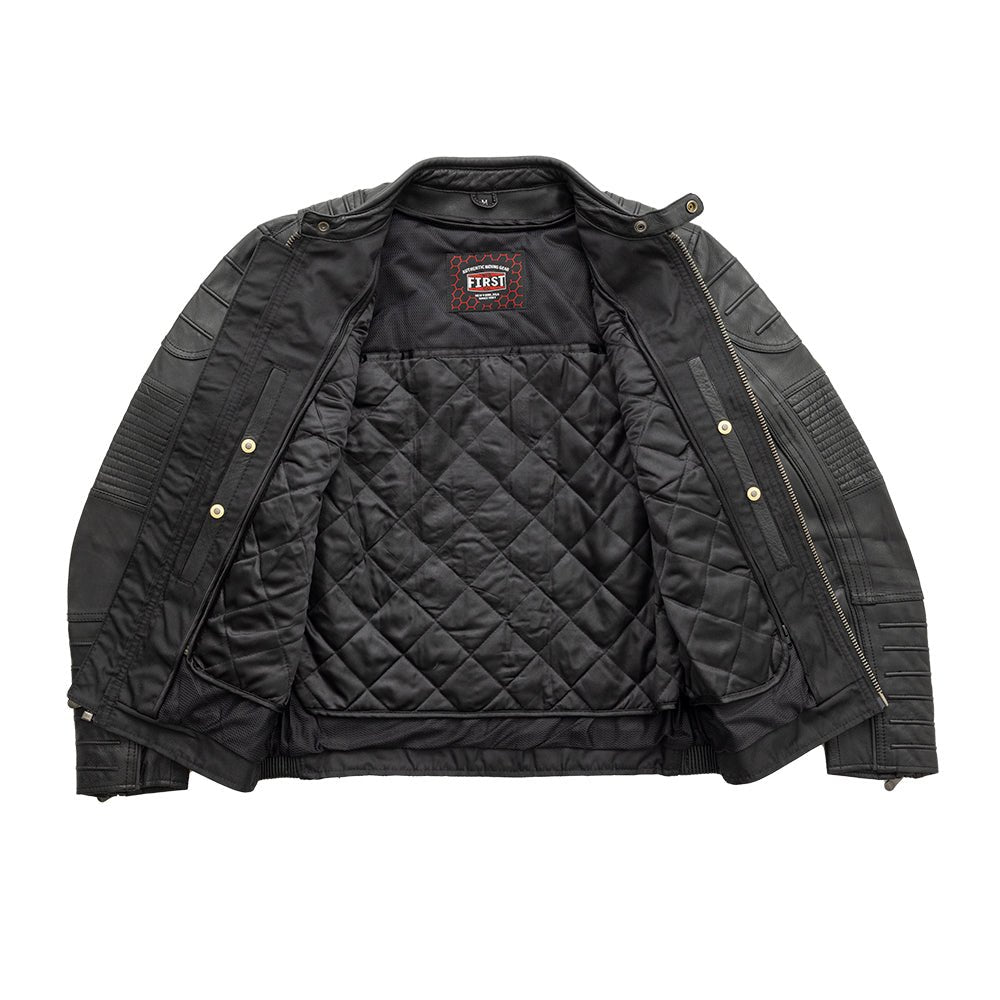
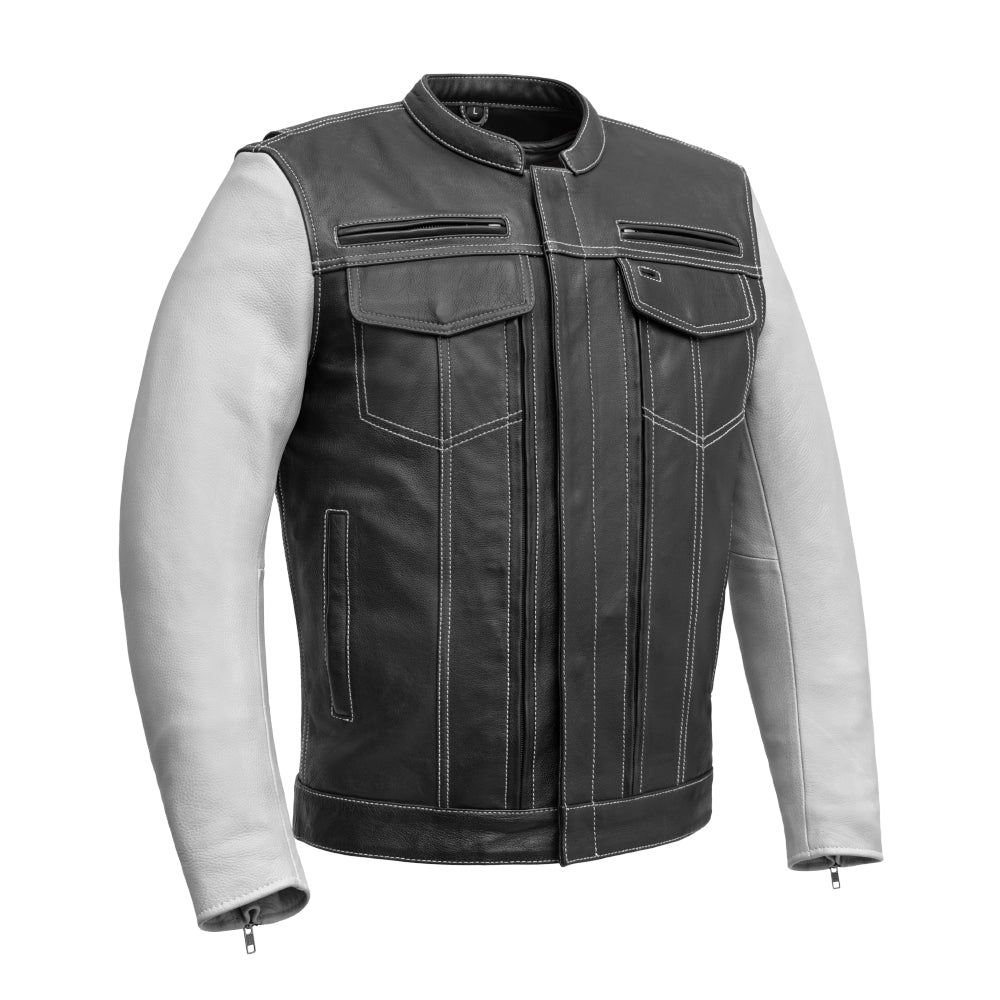
Men's Leather Motorcycle Jackets: Built for Riders & Long Miles Road
Picture Marlon Brando in The Wild One, leaning against his Triumph in that black leather jacket, collar popped, looking like trouble incarnate. That 1953 image didn't just sell movie tickets; rather, it created a uniform, a statement, and a complete rider’s identity.
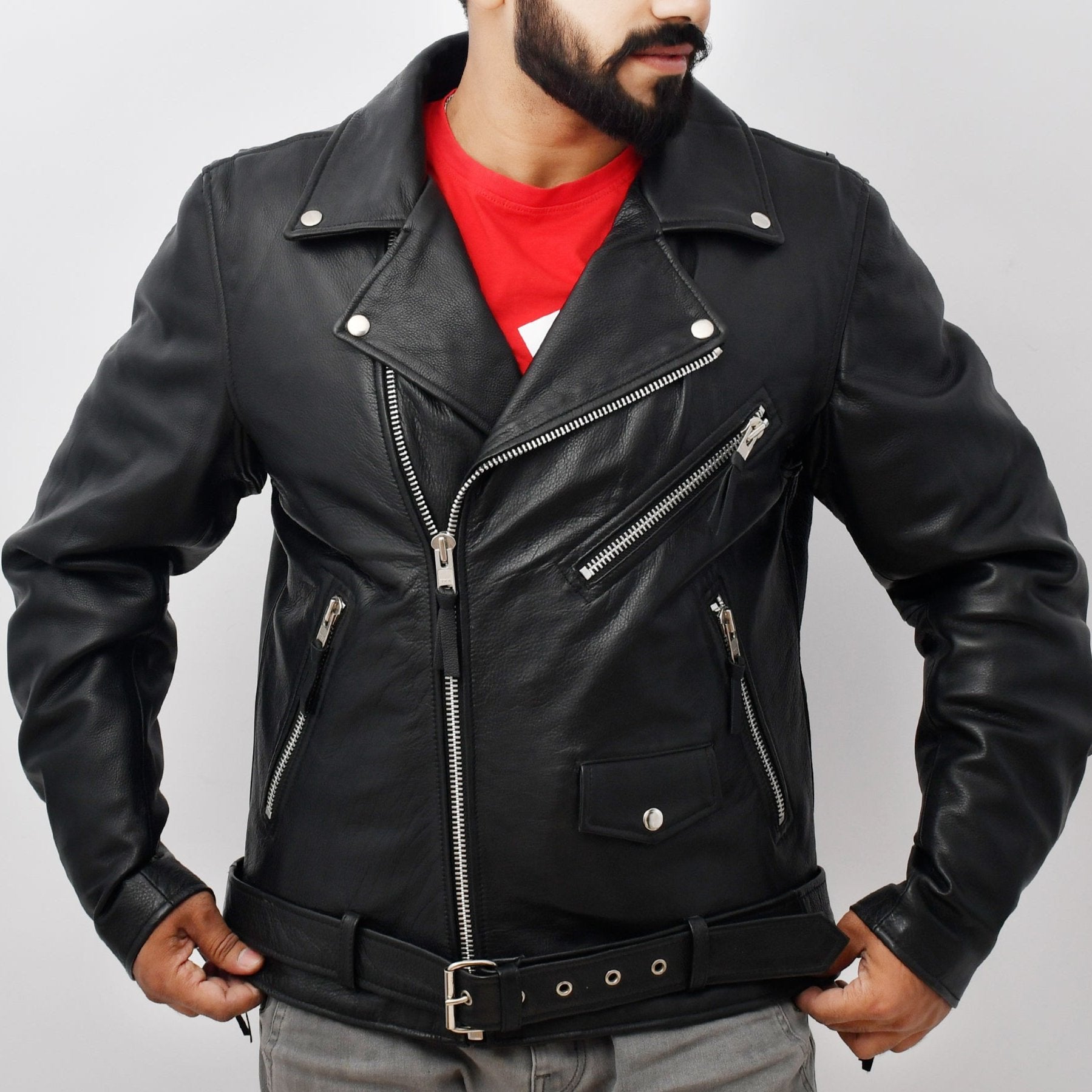
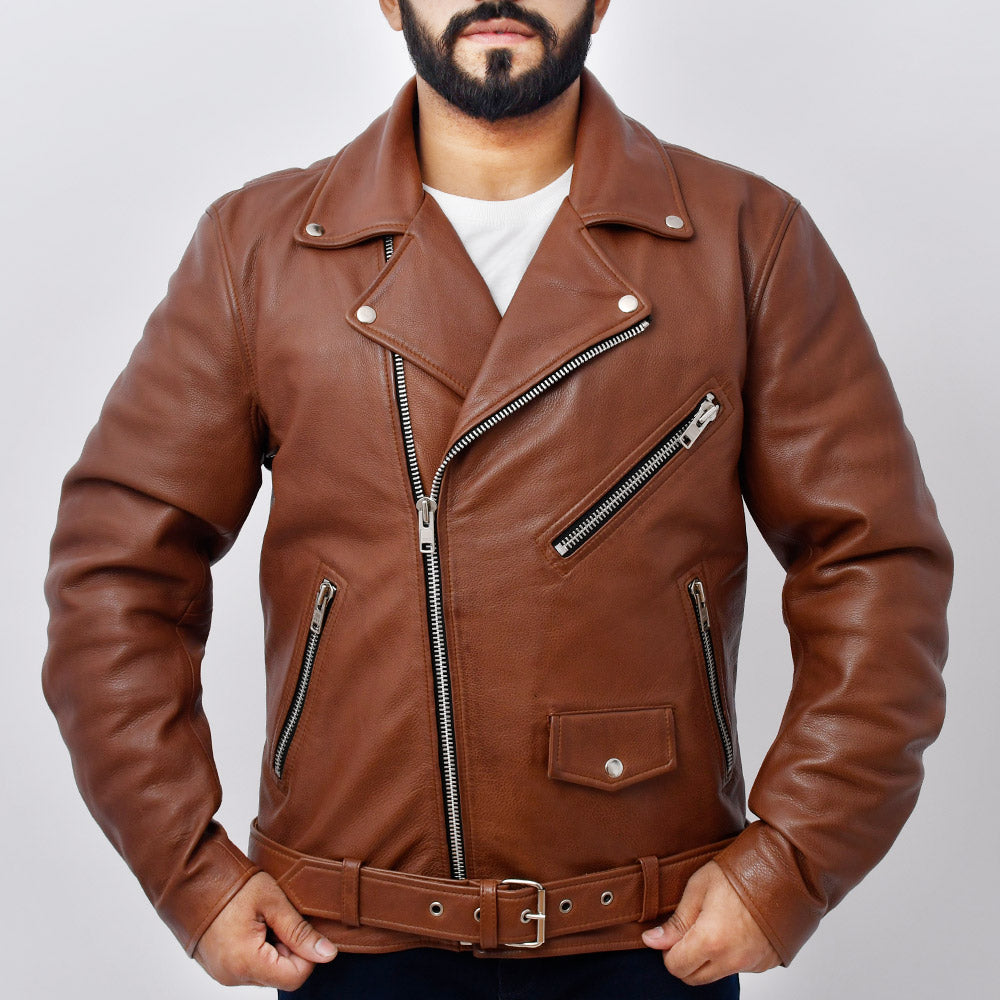
That Perfecto-style jacket Brando wore became the blueprint for every rebel who came after him. And this jacket meant you didn't follow rules written by people who'd never felt 70 mph wind in their face. Since then till present day, the leather jacket has become a symbol of motorcycle riding culture. It depicts the true identity of your riding passion.
Why Leather Still Dominates Motorcycle Jackets After a Century
Try walking into any bike rally from Daytona to Laconia, and you'll see leather everywhere. Not because riders are stuck in the past, but because leather solves problems that modern materials still can't match. Here is why:
-
Protection That's Been Proven Since 1903: Modern crash testing shows premium cowhide (1.2-1.4mm thickness) can withstand road contact for 3-5 seconds before wearing through.
-
Wind Resistance at Any Speed: Leather creates a wind barrier that keeps cold air from cutting through to your core. Hit the highway at 75 mph on a 50-degree morning in textile, and you'll feel every bit of that wind chill.
-
Durability That Outlasts Your Bike: Leather doesn't wear out; rather, it breaks in. That stiff new jacket becomes more comfortable every season while maintaining its protective qualities.
-
Style That Doesn't Expire: We all know that fashion trends come and go but leather motorcycle jackets always exist. A classic black leather biker jacket looks right in 1955, 1985, 2010, or today.
Understanding Leather Types: What You're Actually Buying
Not all leather is created equal. The hide type determines everything from protection level to break-in time to how long your jacket lasts. Here's what actually matters:
-
Cowhide: Cowhide is what most men’s motorcycle leather jacket options use, and for good reason. It's thick (usually 1.2-1.4mm), tough, and offers maximum abrasion resistance.
-
Buffalo Hide: Buffalo leather runs thicker than cowhide with a more pronounced grain texture. It's the heavyweight option, and it is literally heavier and tougher with extra abrasion resistance.
-
Goatskin: Goatskin hits a sweet spot between protection and comfort. It's lighter than cowhide and more flexible from day one, yet still offers solid abrasion resistance.
-
Lambskin: Lambskin is the softest, lightest, most luxurious leather option. It feels incredible, drapes beautifully, and requires almost no break-in. But here's the reality: lambskin sacrifices protection for comfort.
Motorcycle Jacket Styles That Decides How You Ride
The style you choose isn't just about looks; it's about matching your jacket to your bike, your riding position, and how you actually use it.
-
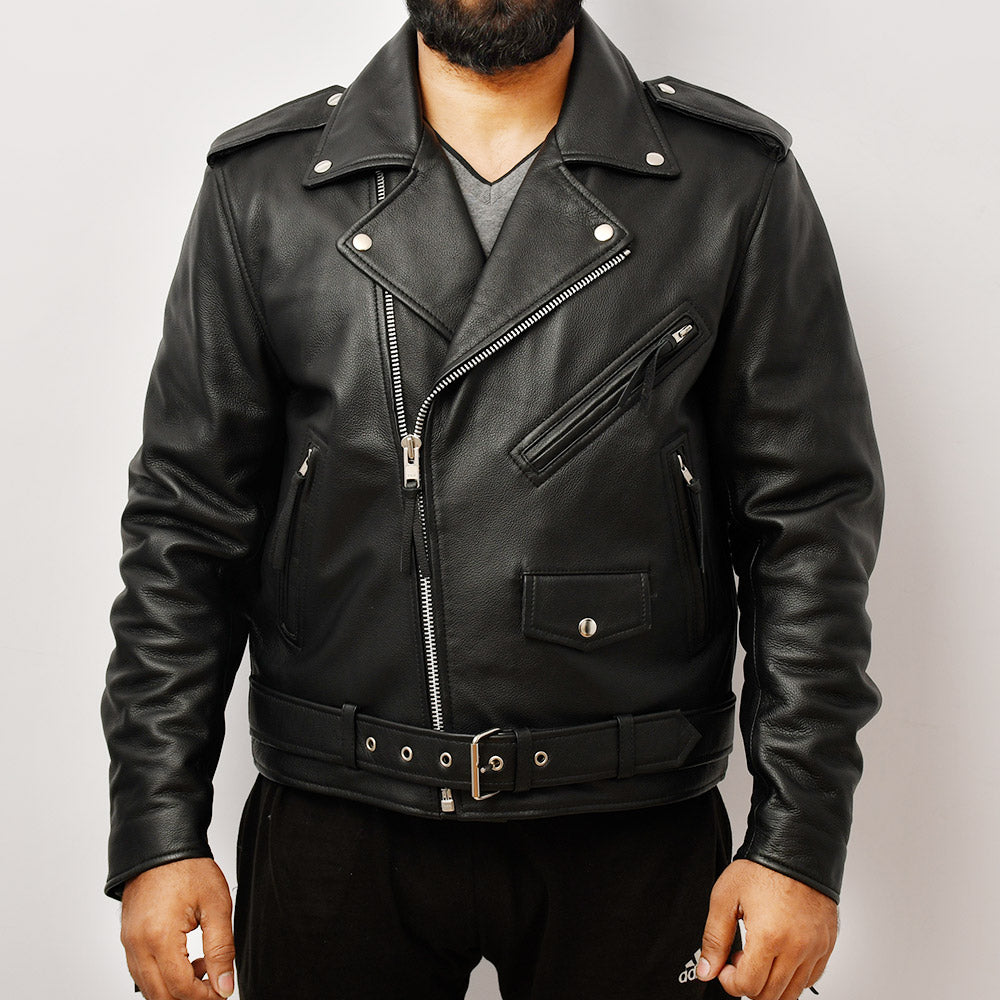
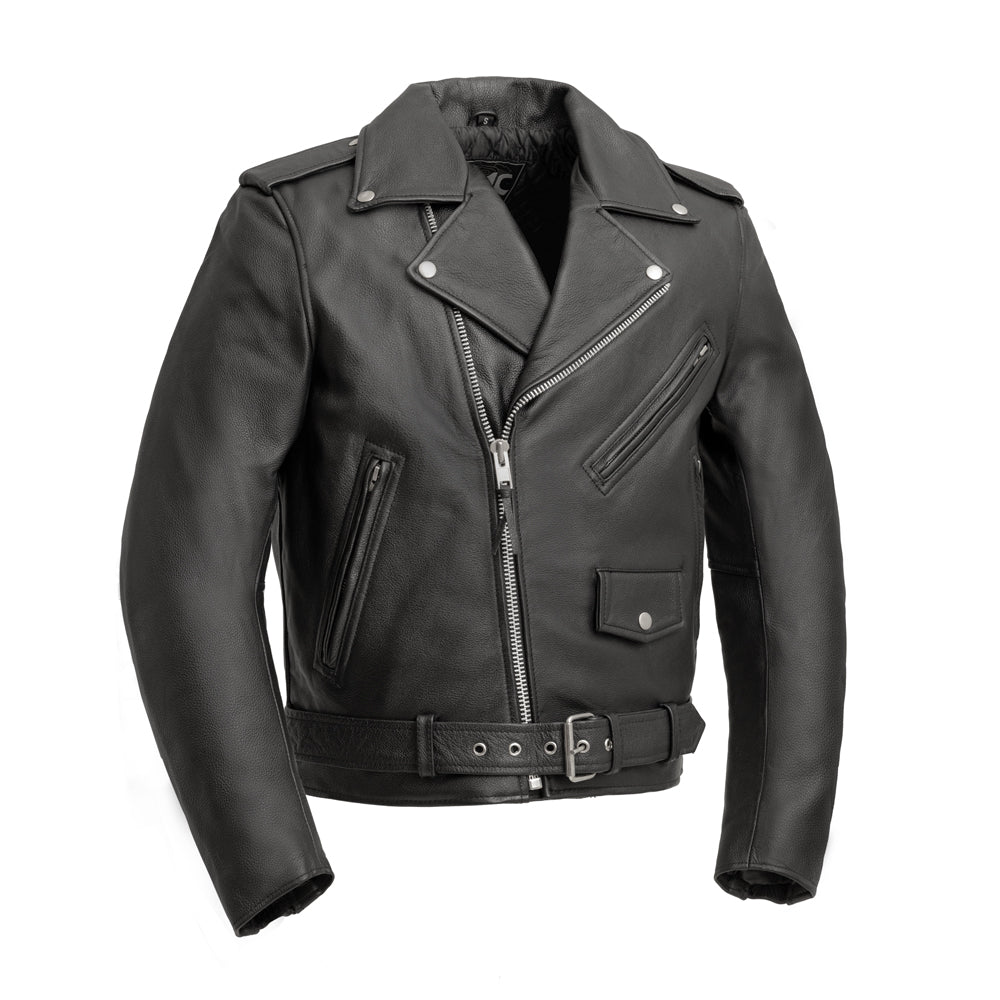
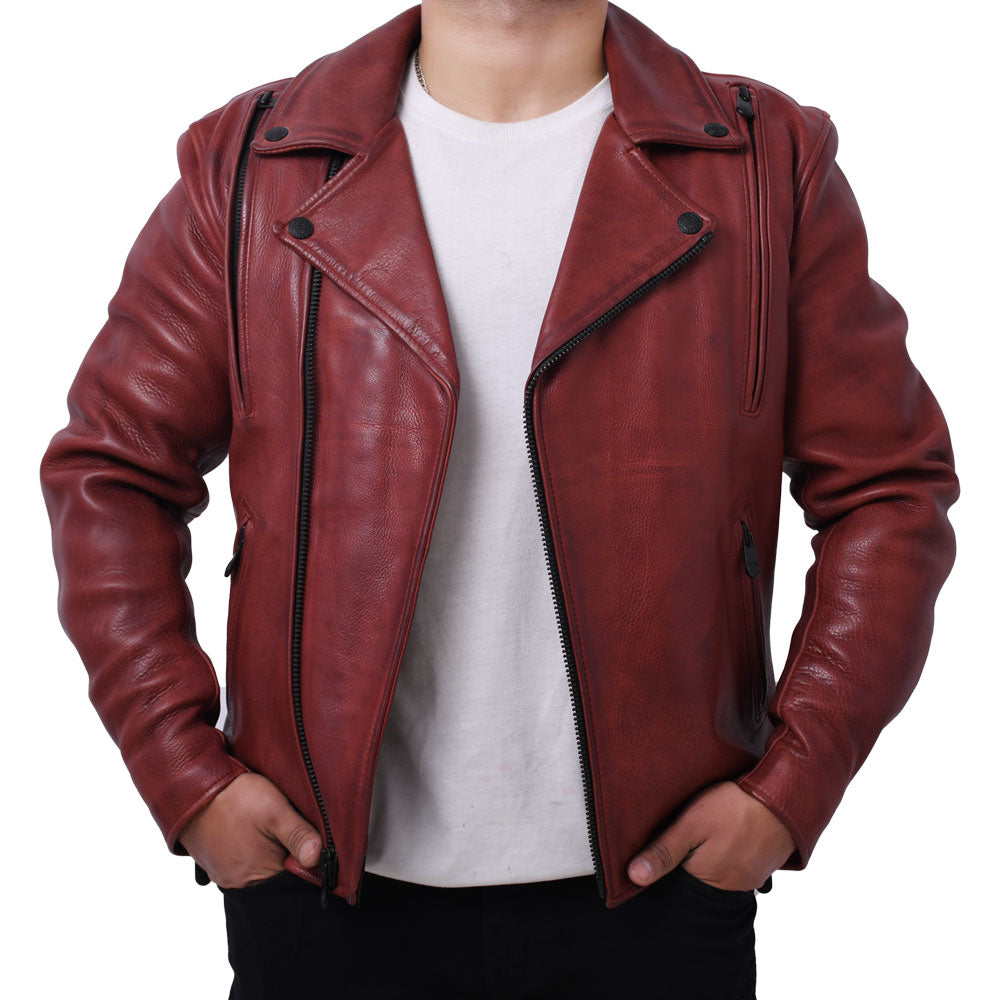
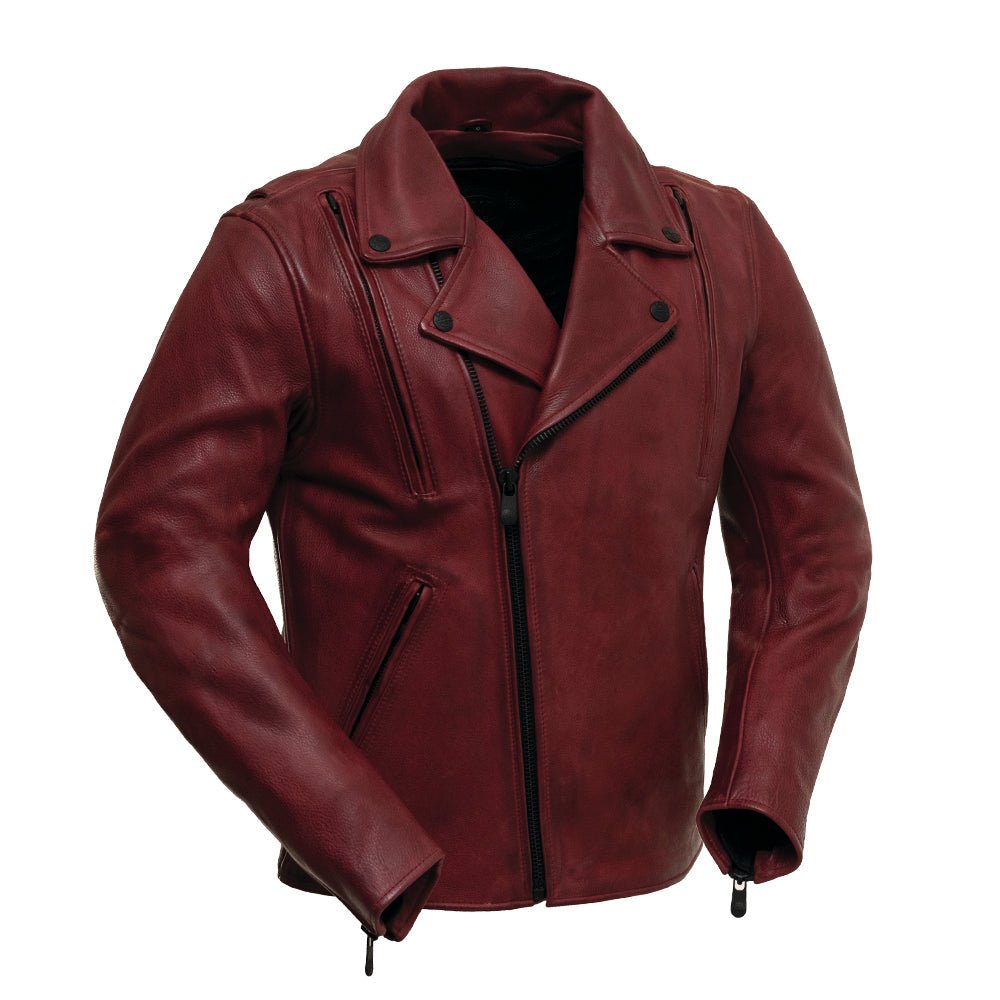
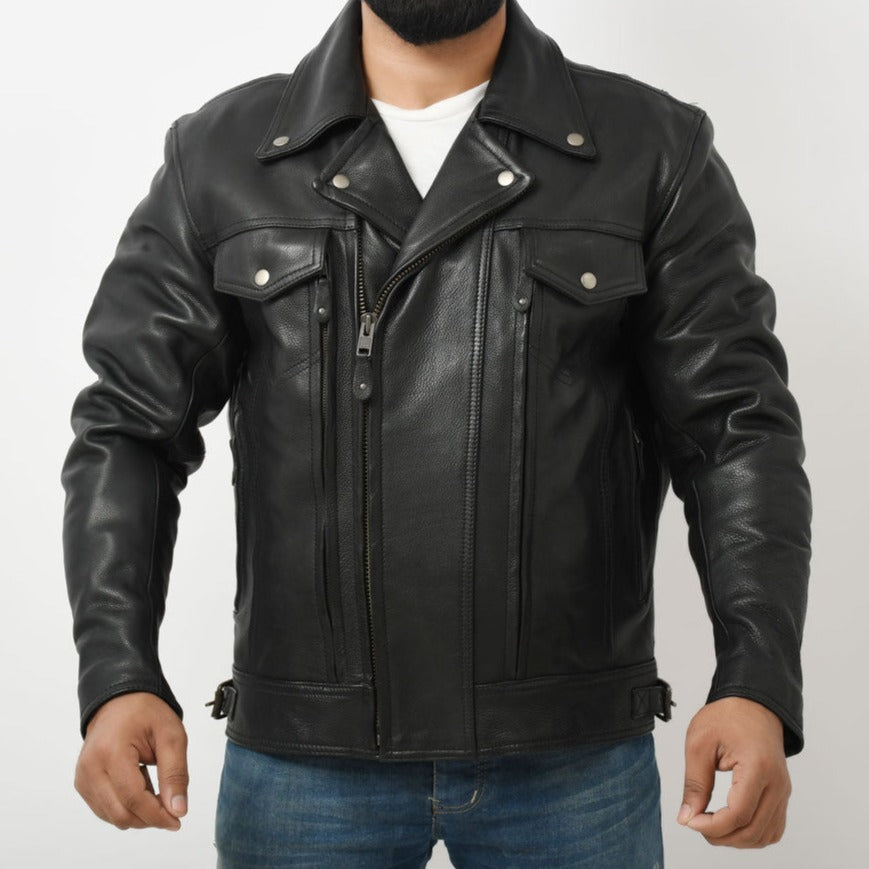
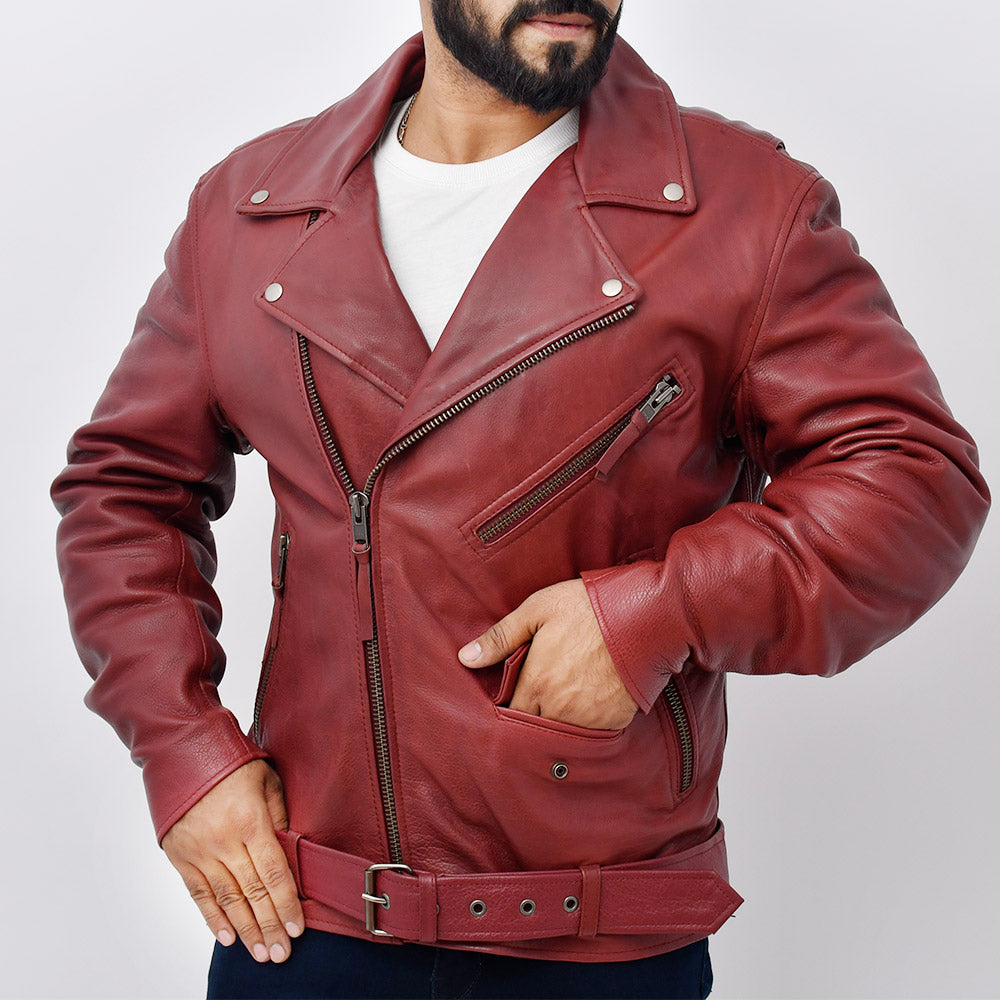
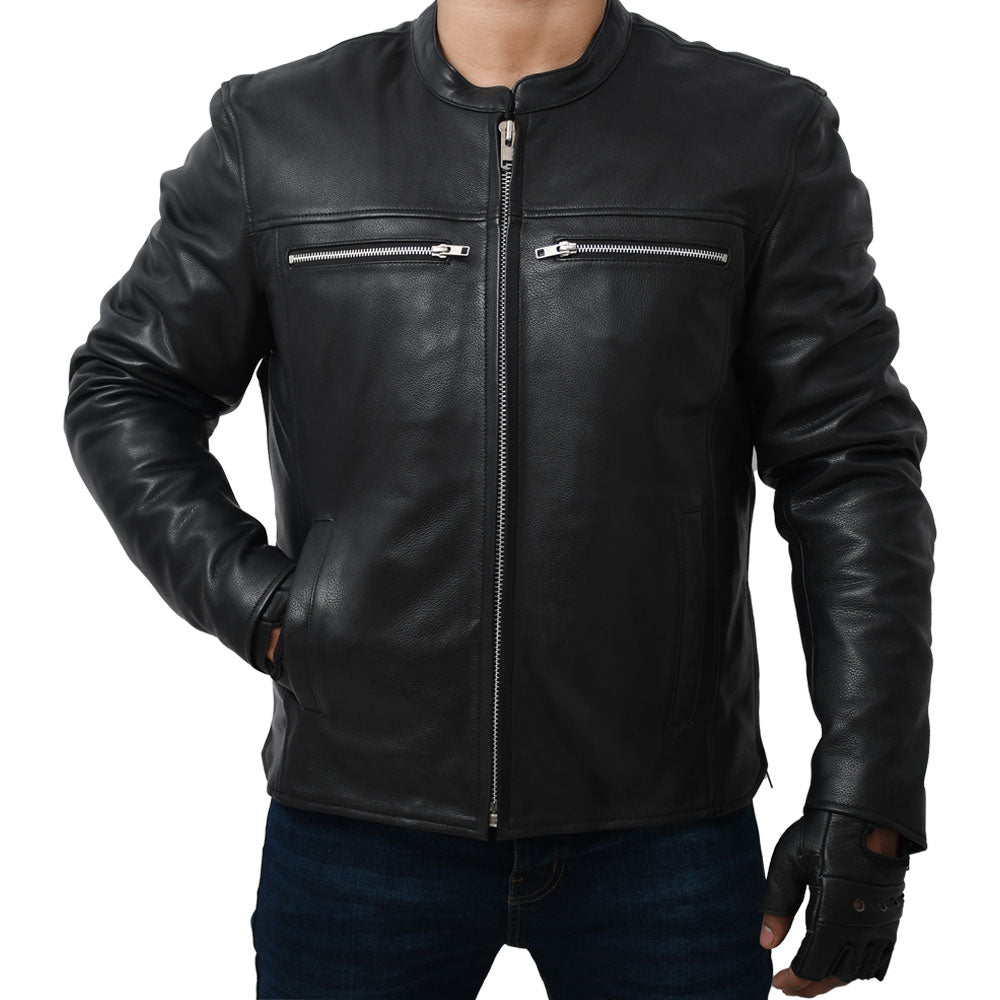
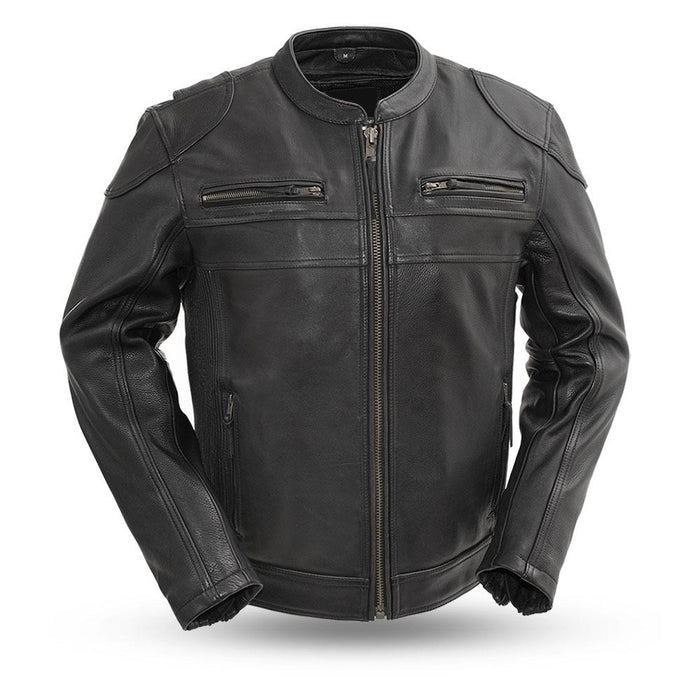
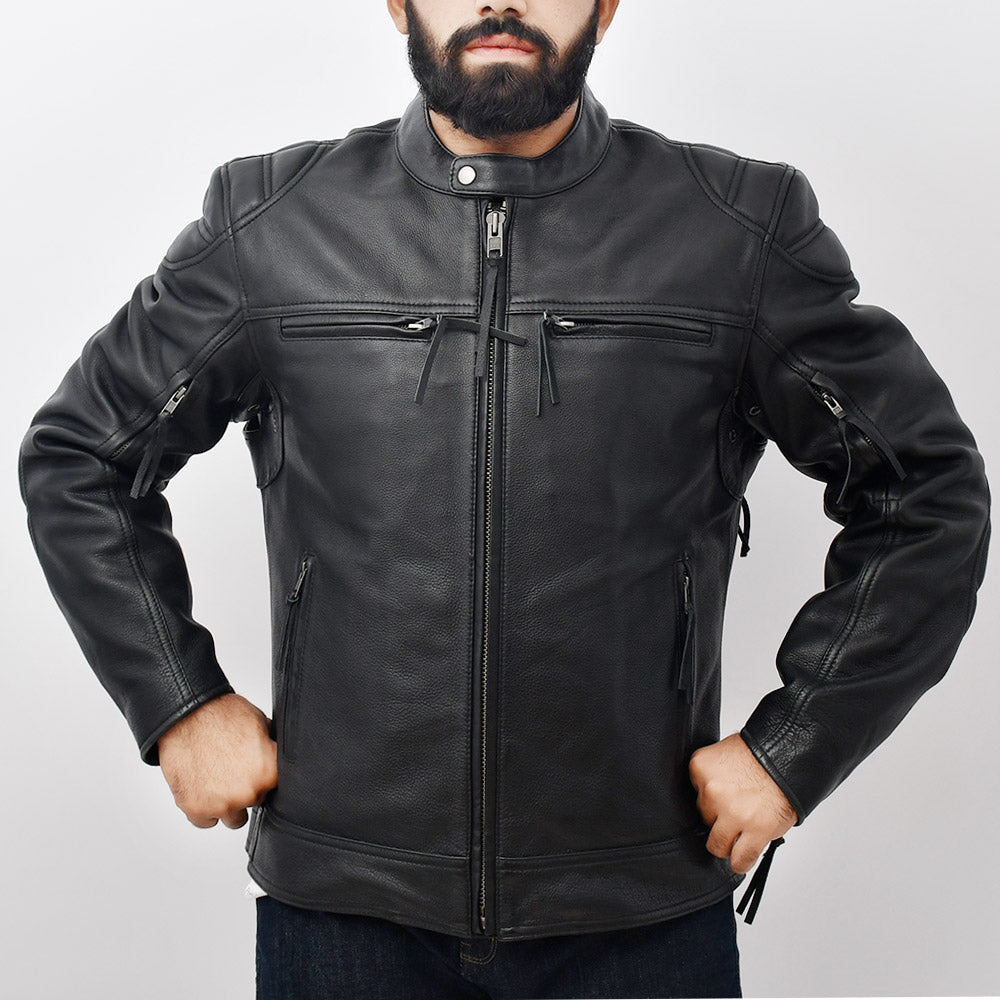
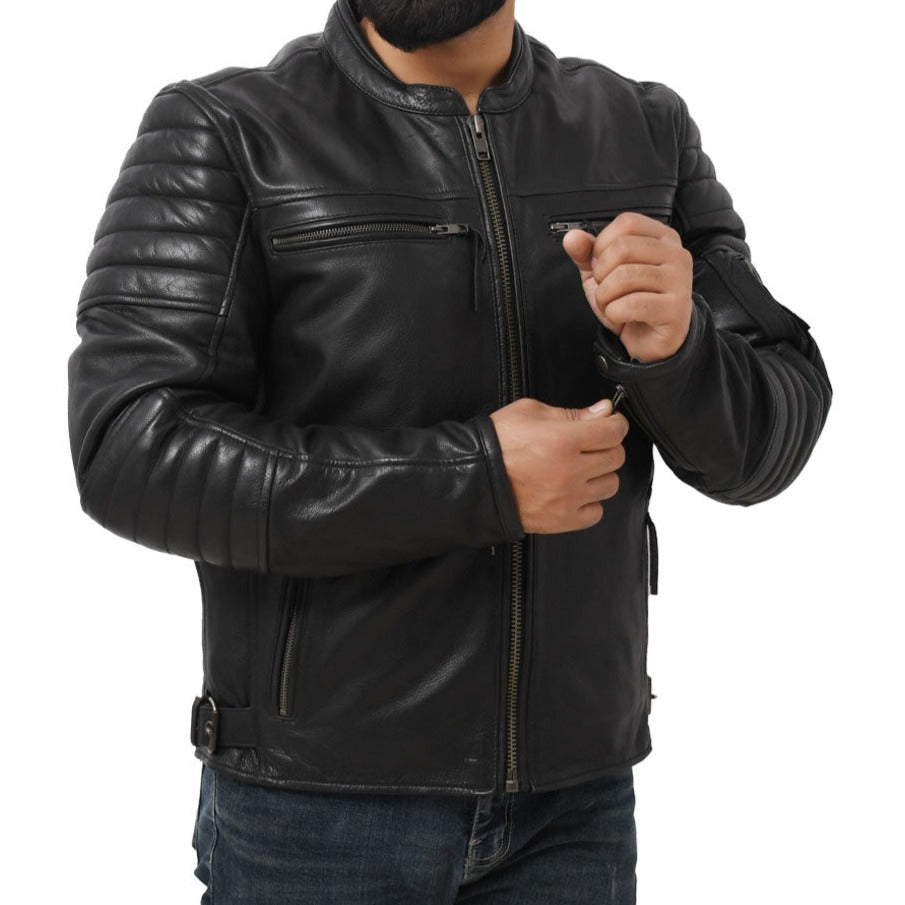
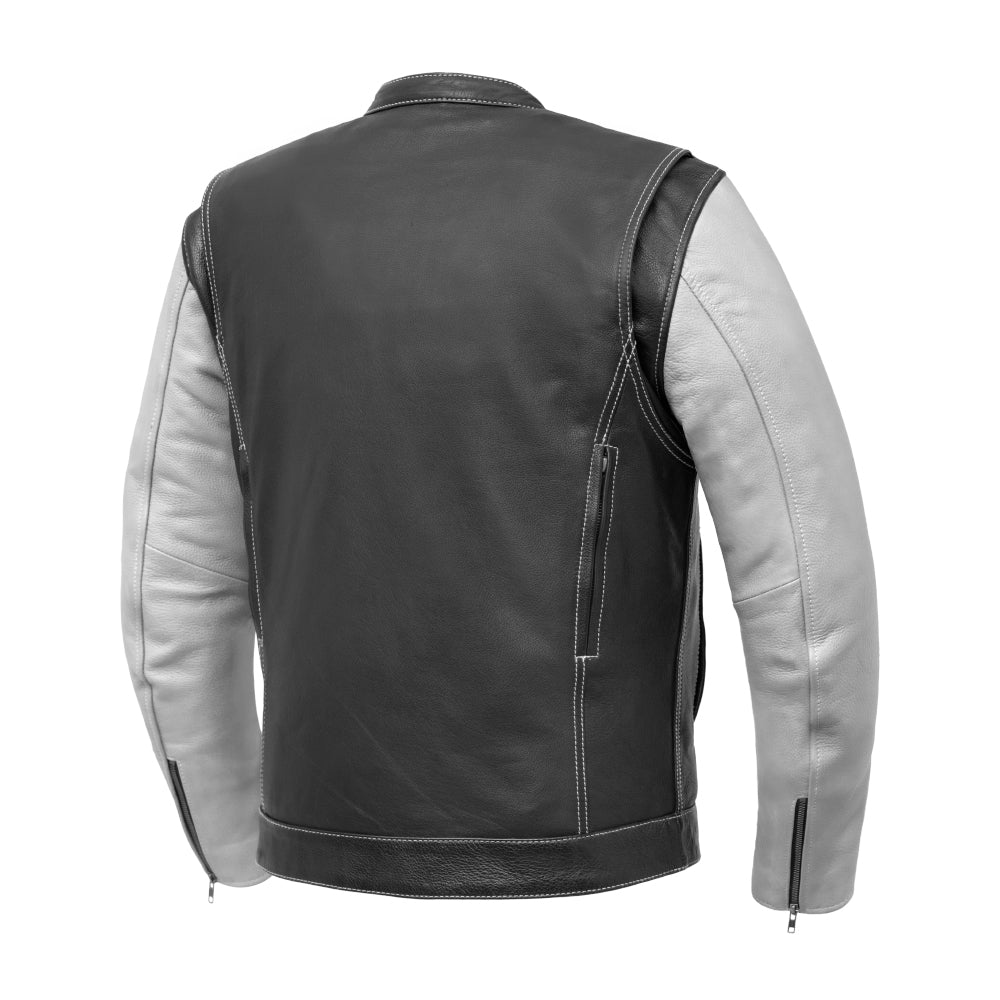
Classic Biker / Perfecto Style: This leather men's-style biker jacket works on any bike but looks particularly right on cruisers, bobbers, and vintage machines. Features typically include multiple zipper pockets, D-rings for attaching chains or accessories, and adjustment straps at the waist and cuffs.
-
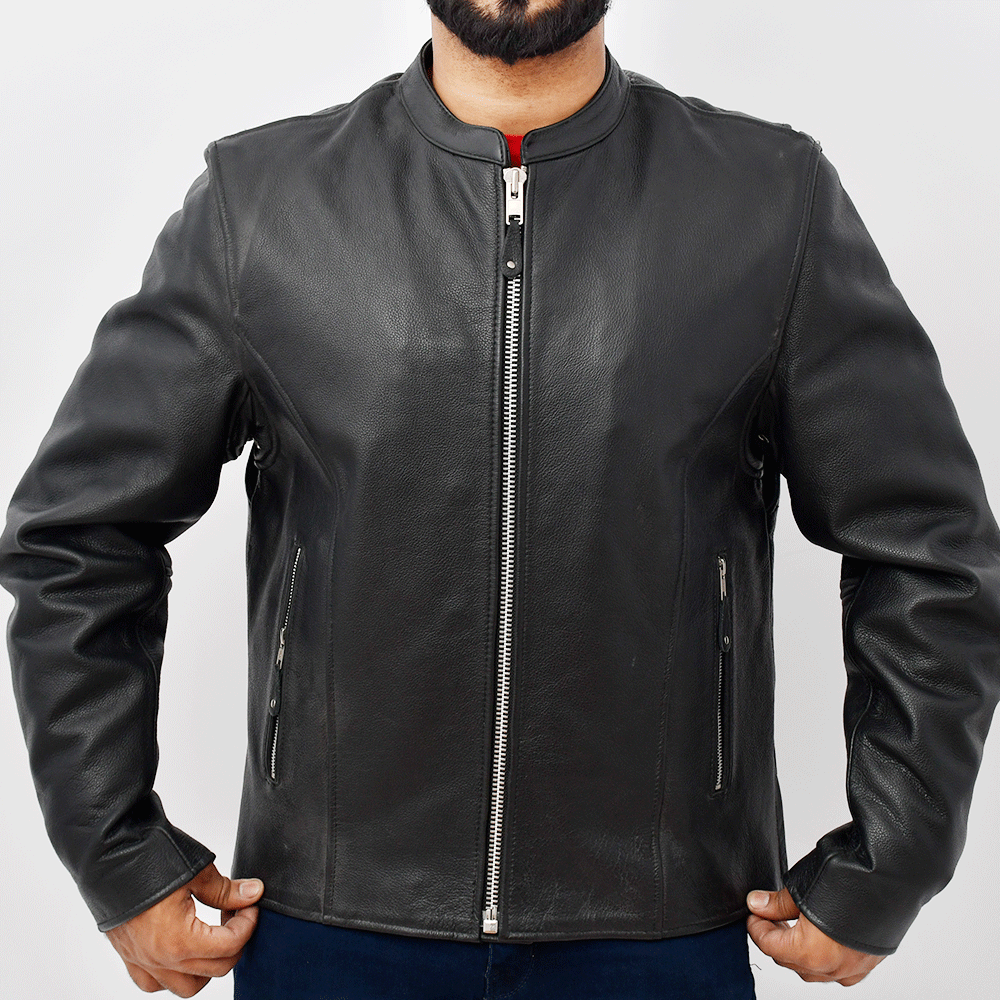
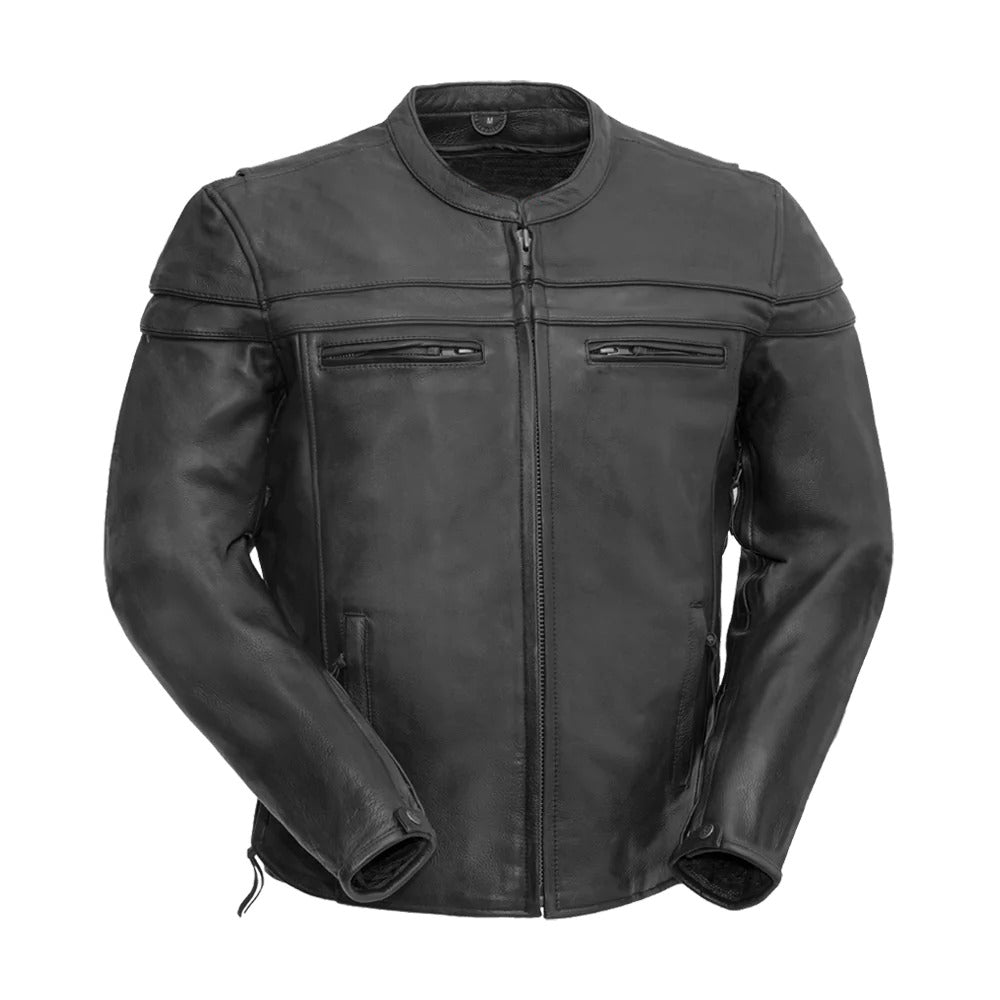
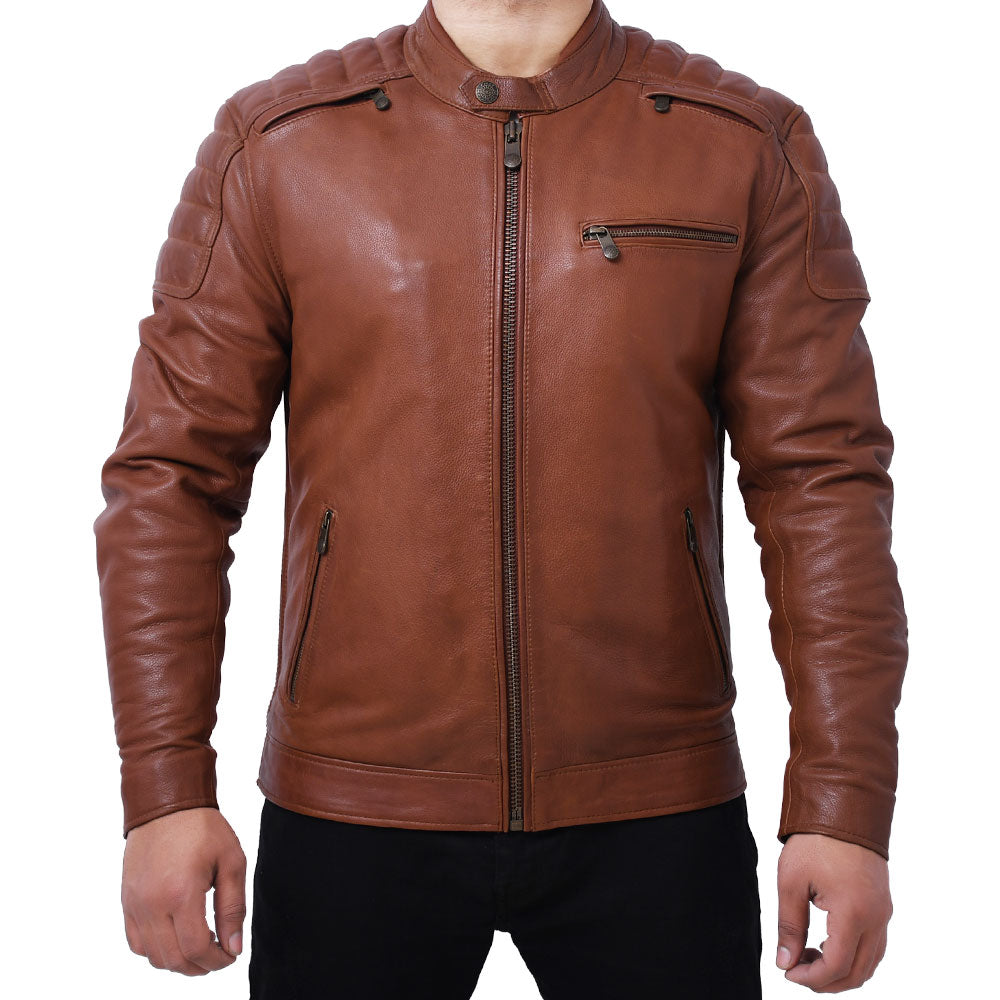
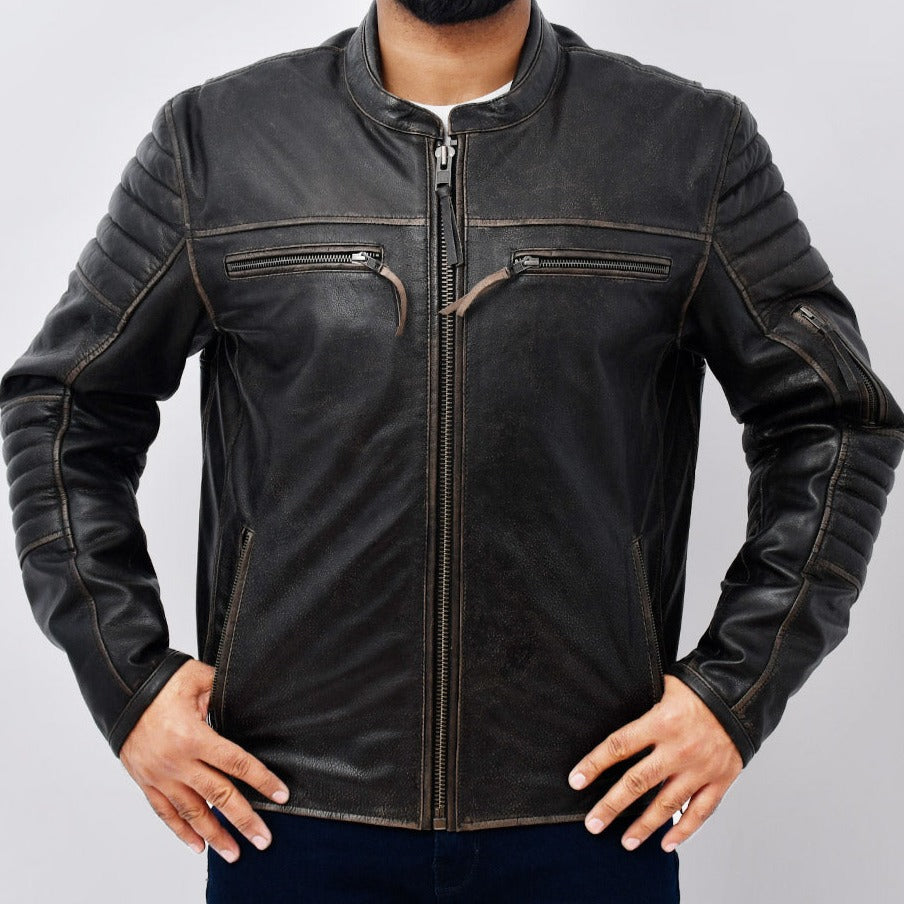
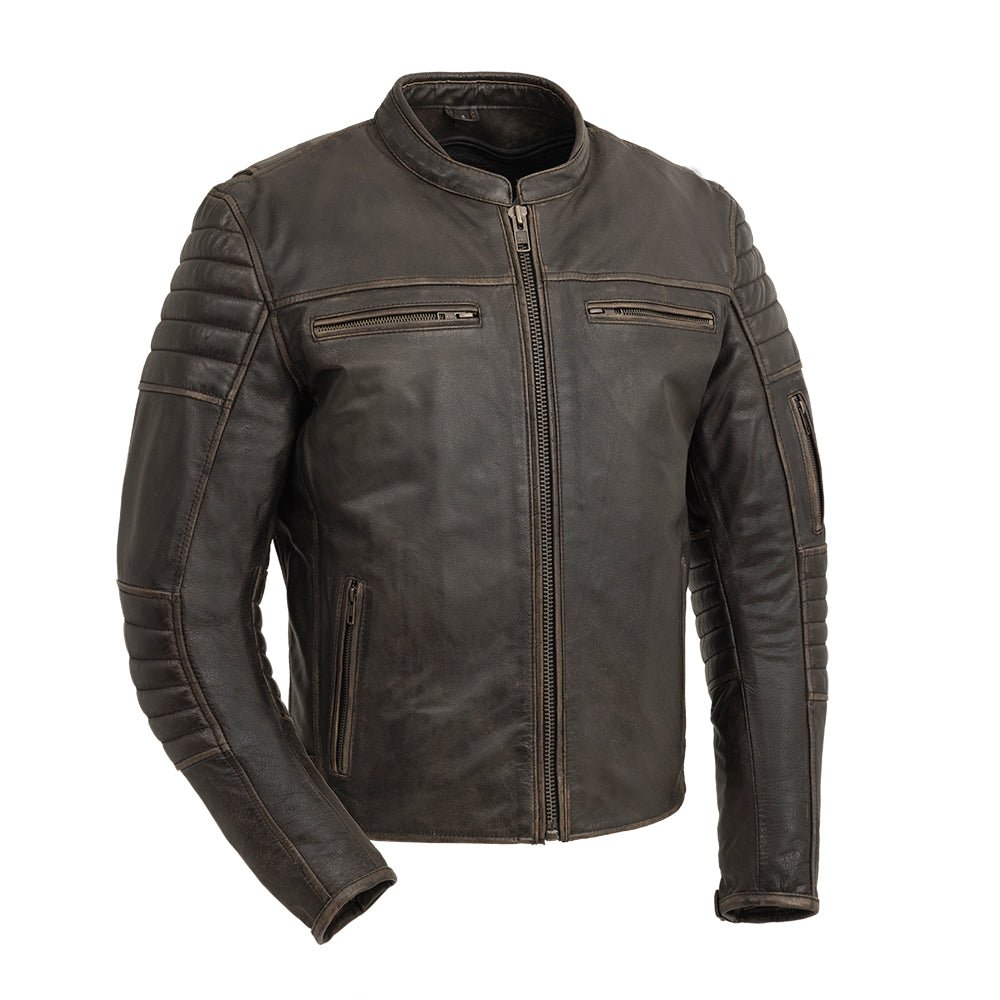
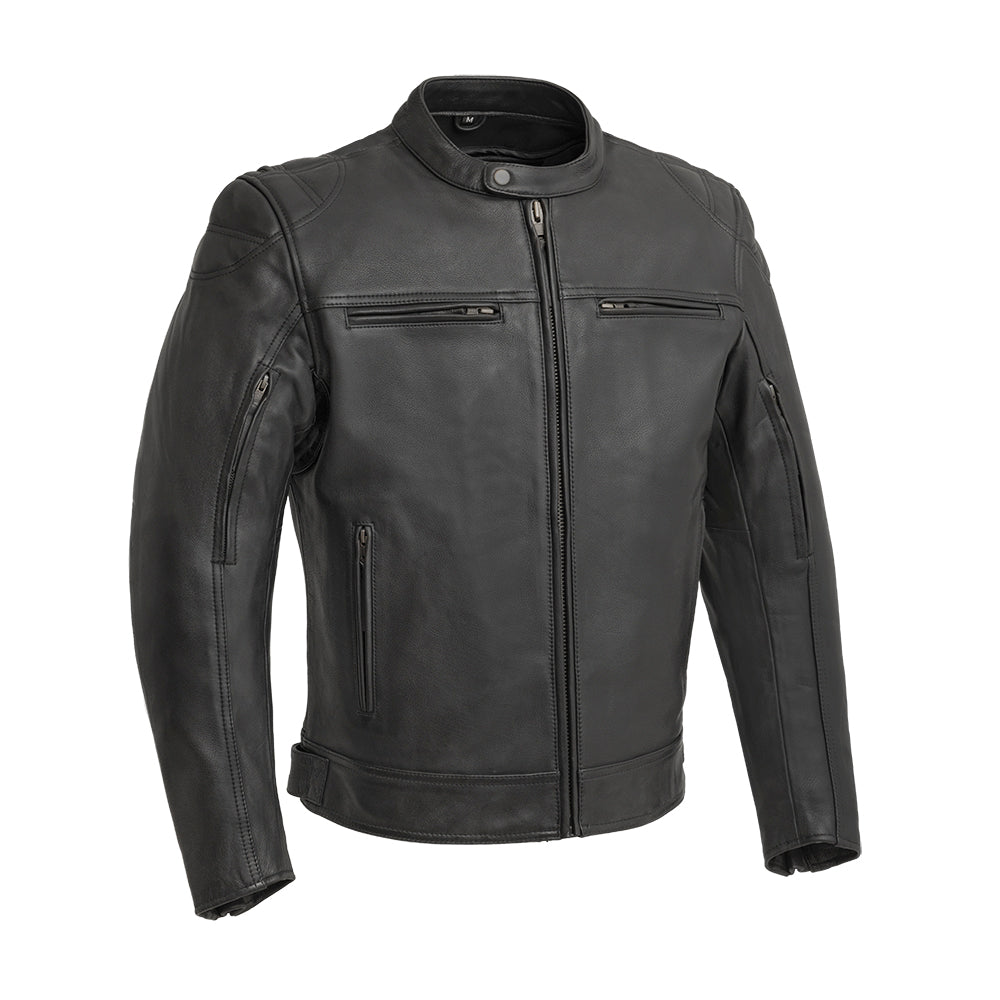
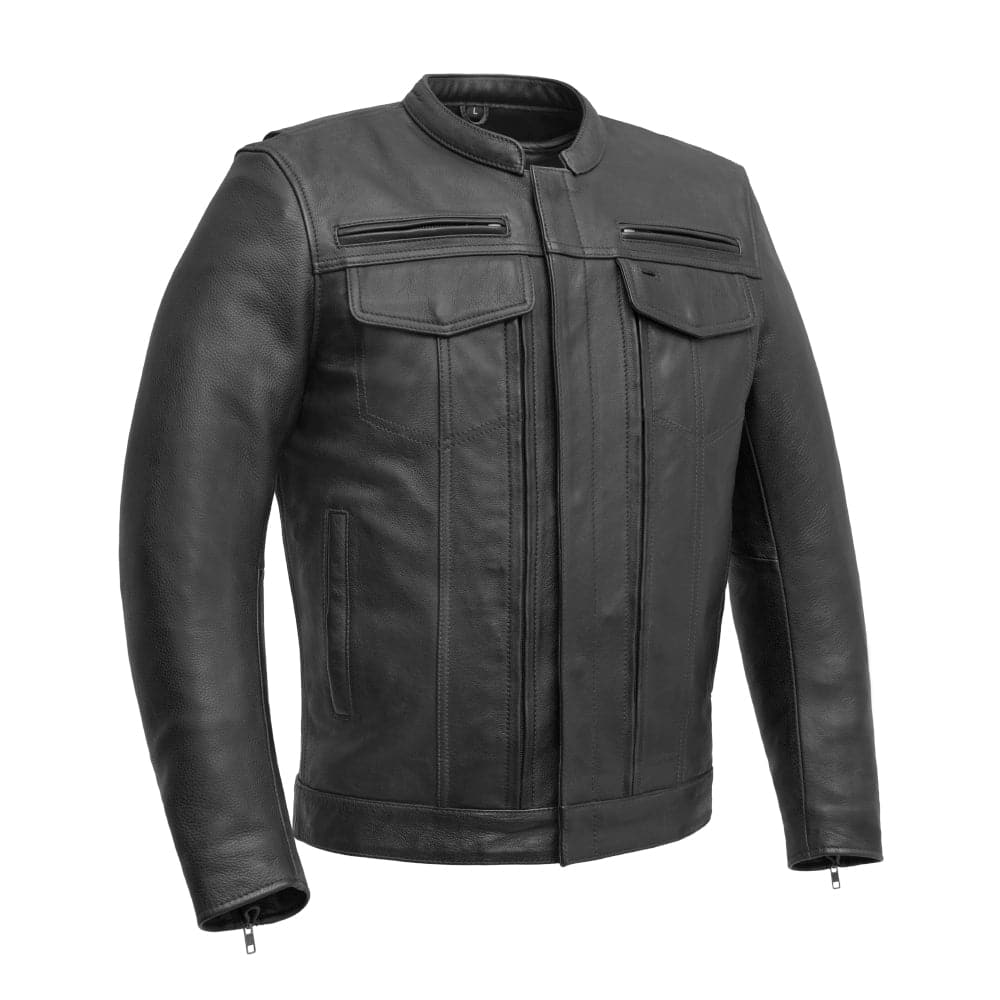
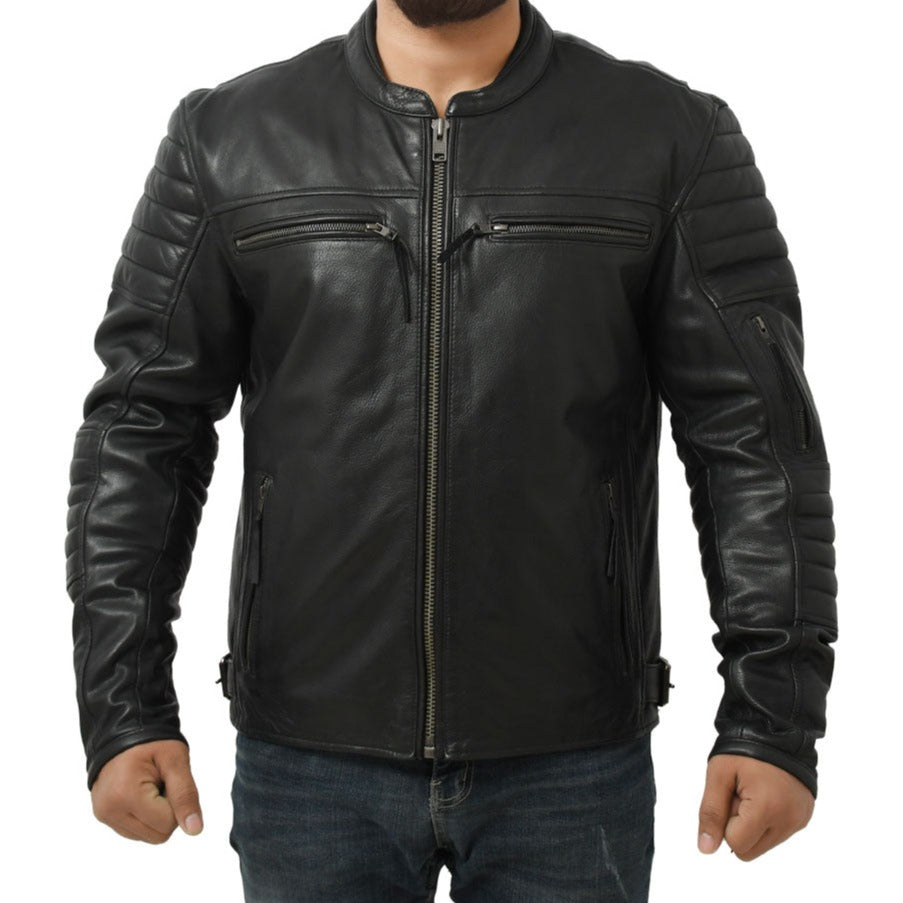
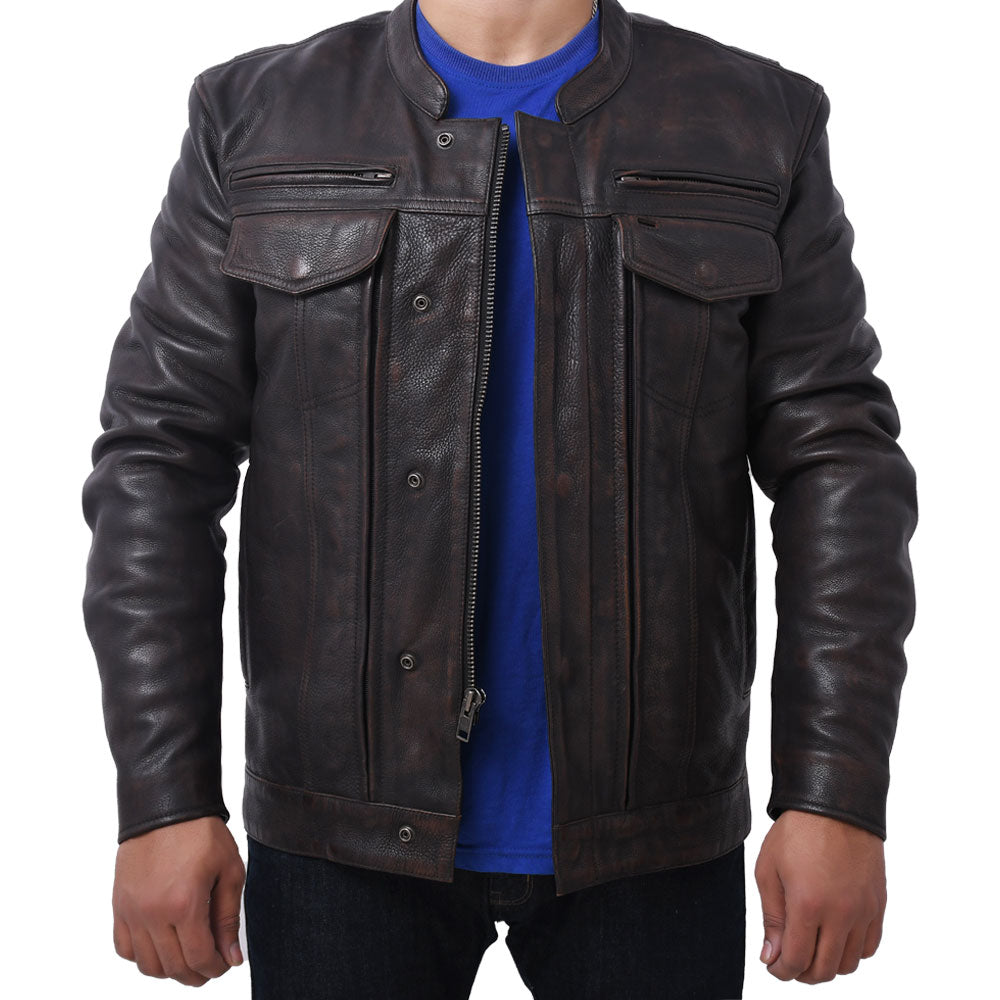
Cafe Racer / Moto Jacket: These jackets feature clean lines, minimal hardware, band collars or small stand-up collars, and a slim silhouette that looks fast standing still. Cafe racer jackets typically hit at the waist with a straight hem.
-
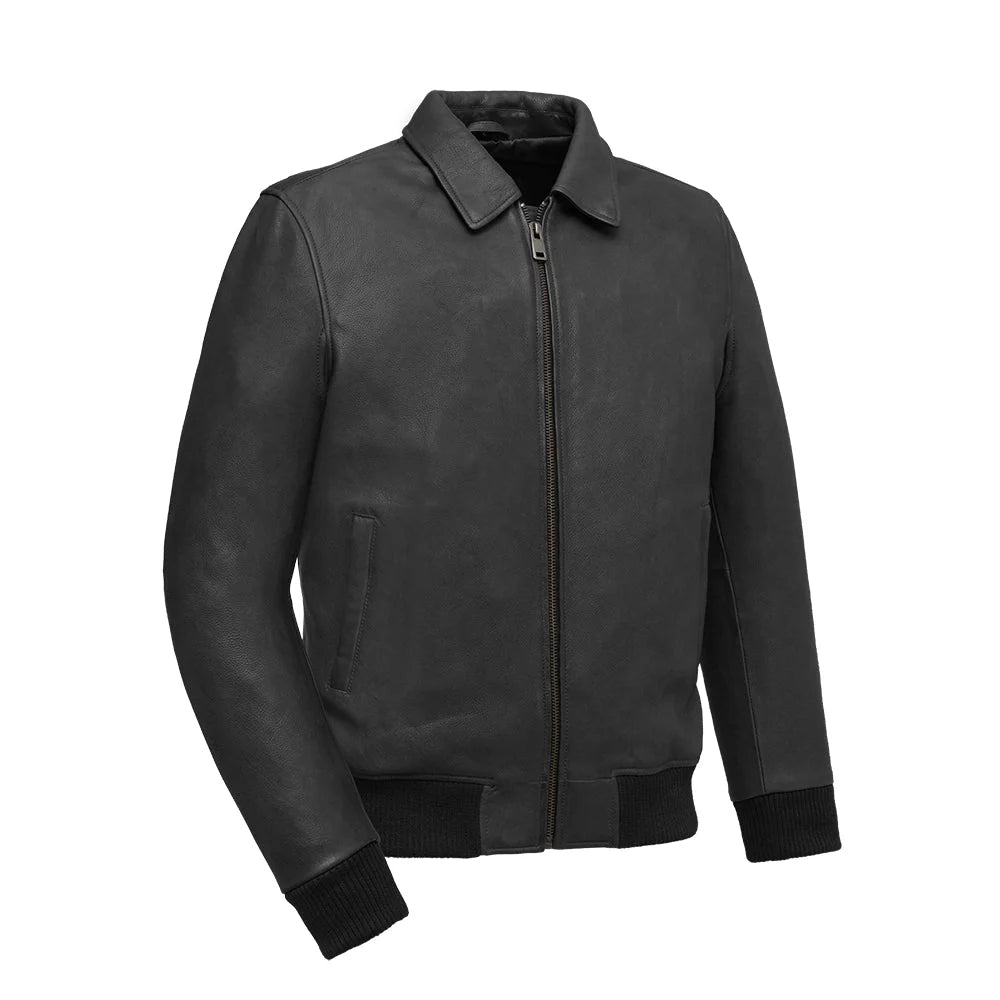
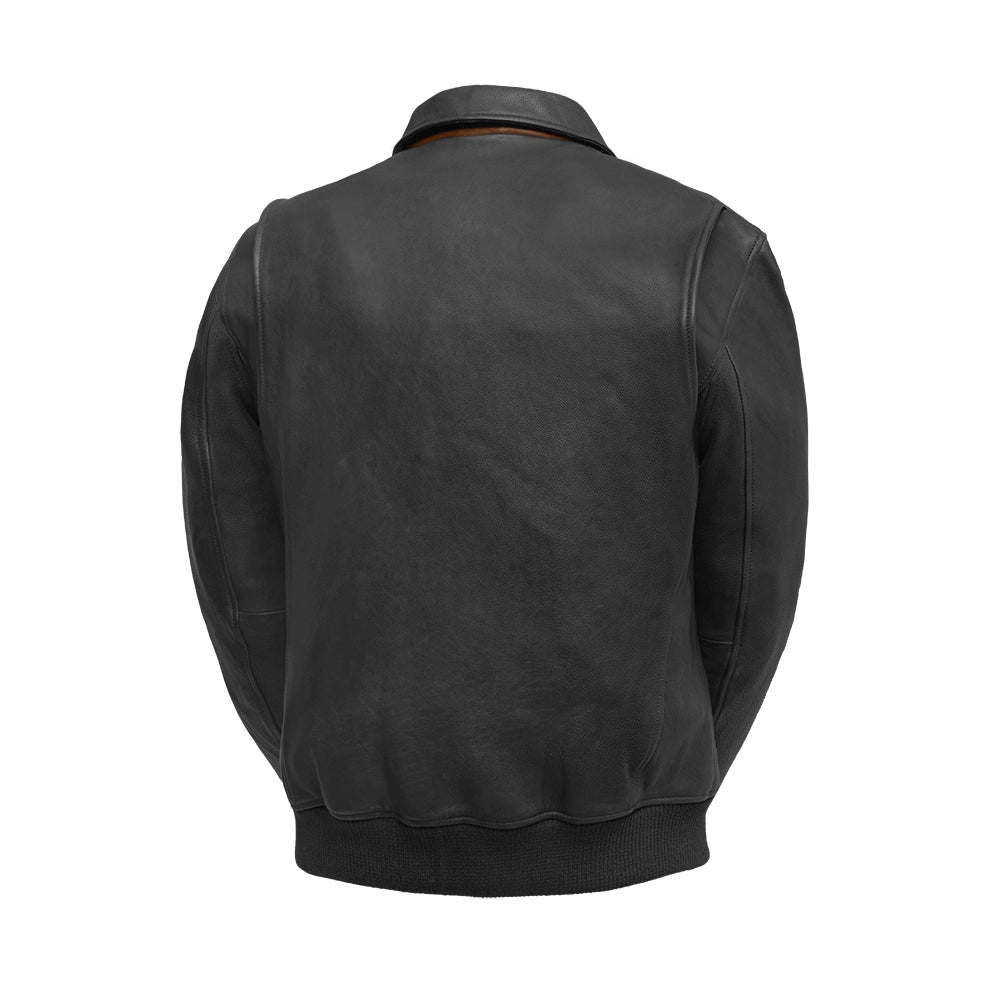
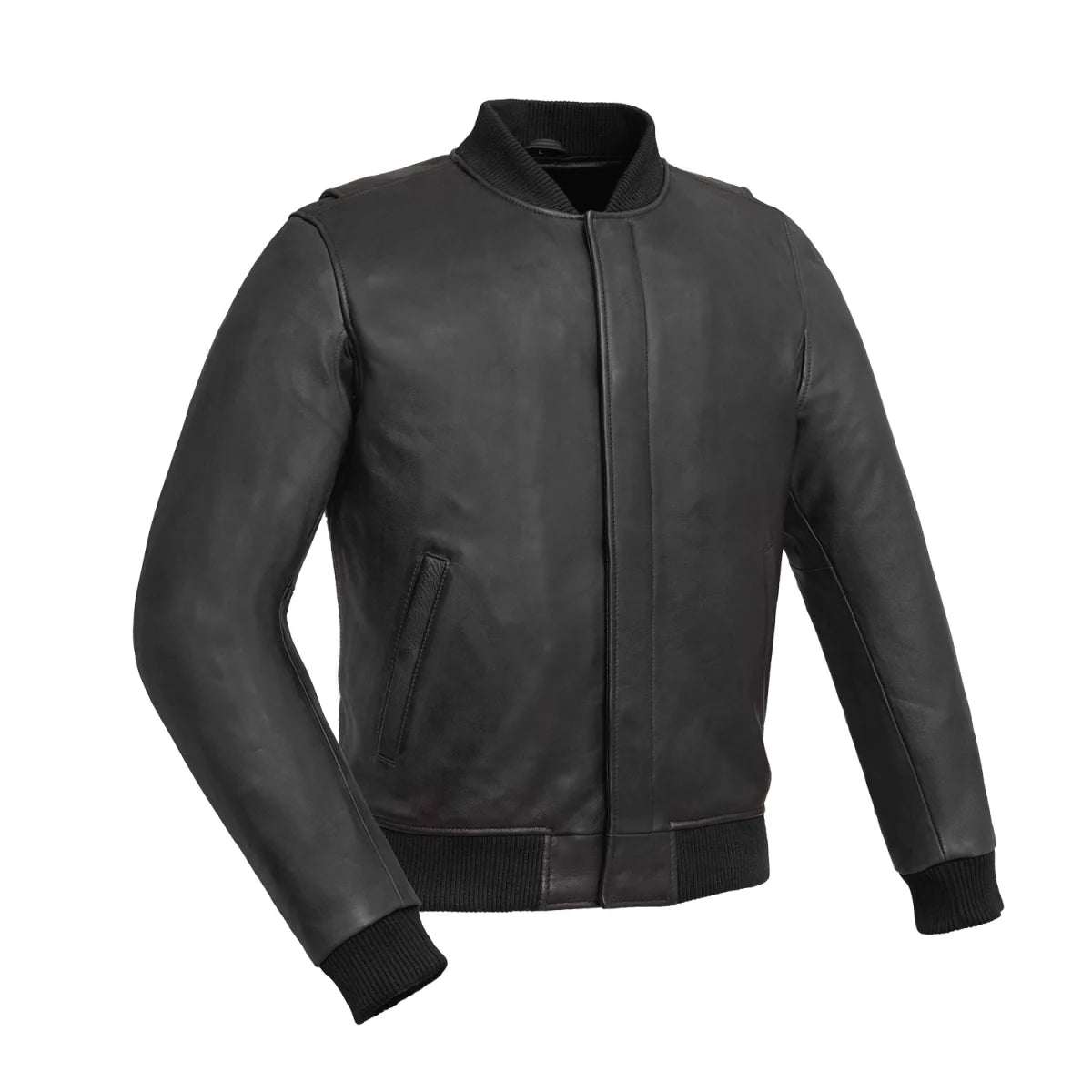
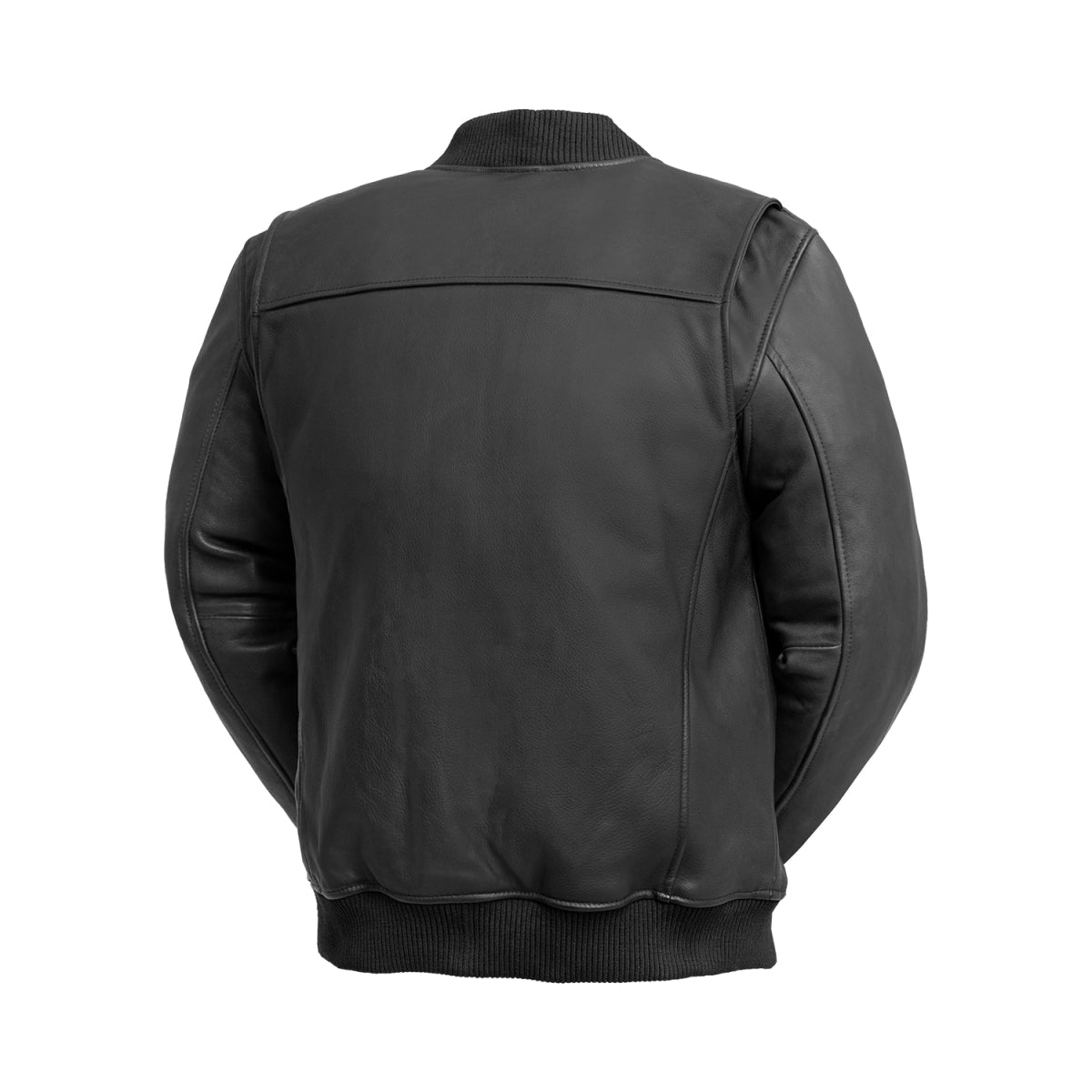
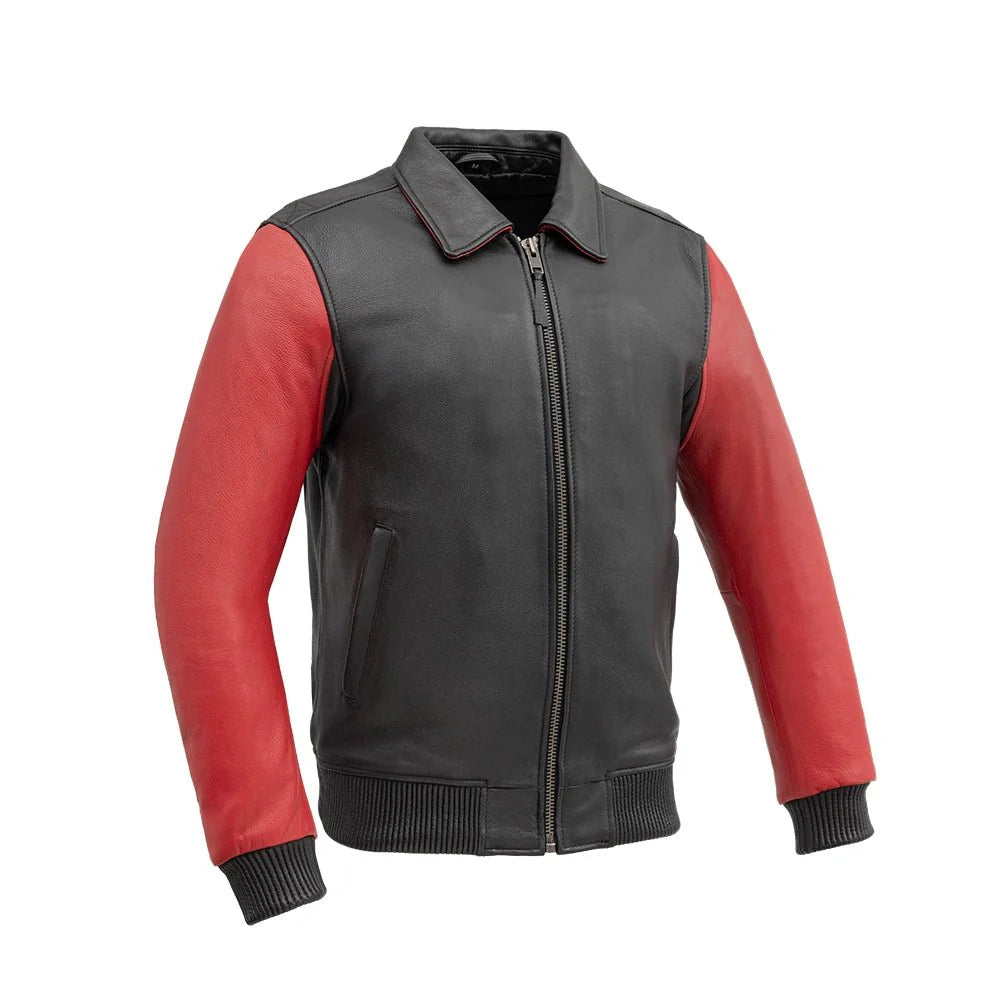
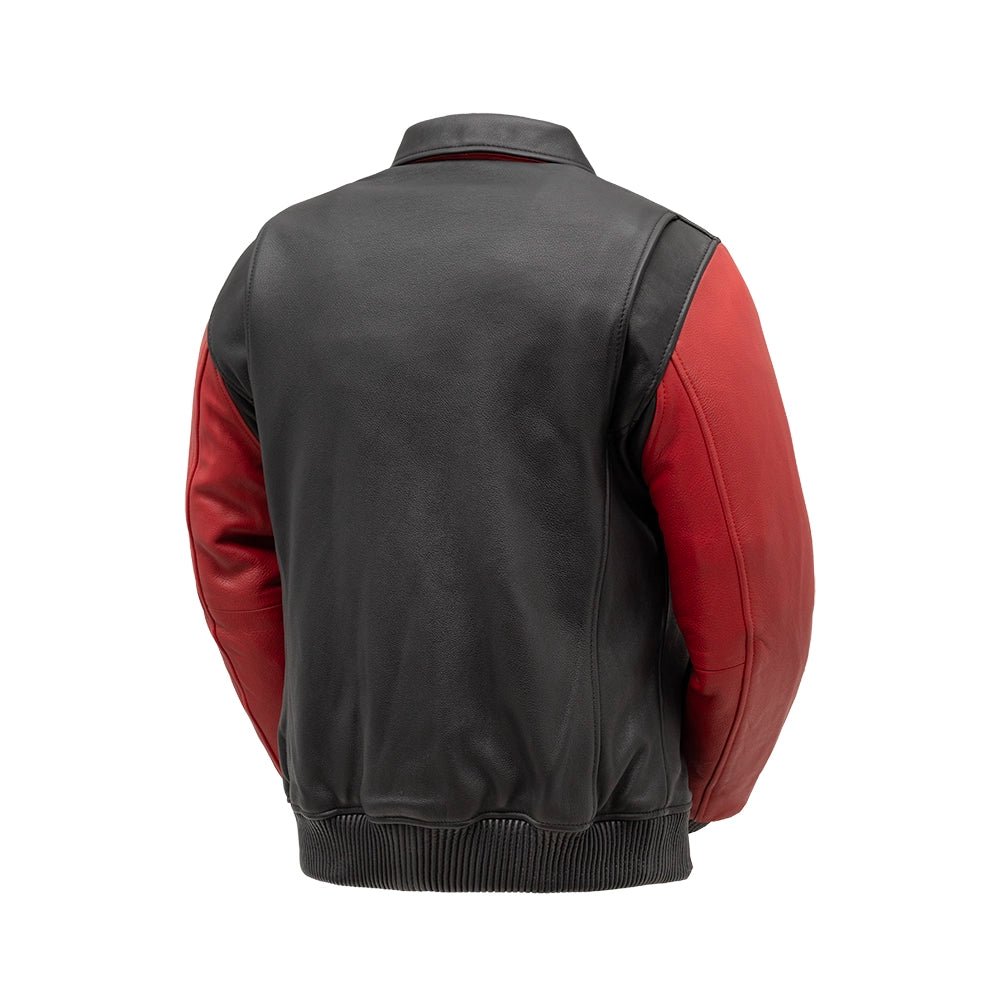
Bomber / Aviator Style: The design features a ribbed collar, cuffs, and waistband that seal out wind; a front zipper closure; and typically a shorter body length that sits at the waist. Originally designed for pilots facing sub-zero temperatures at altitude, bomber jackets translated perfectly to motorcycling.
-
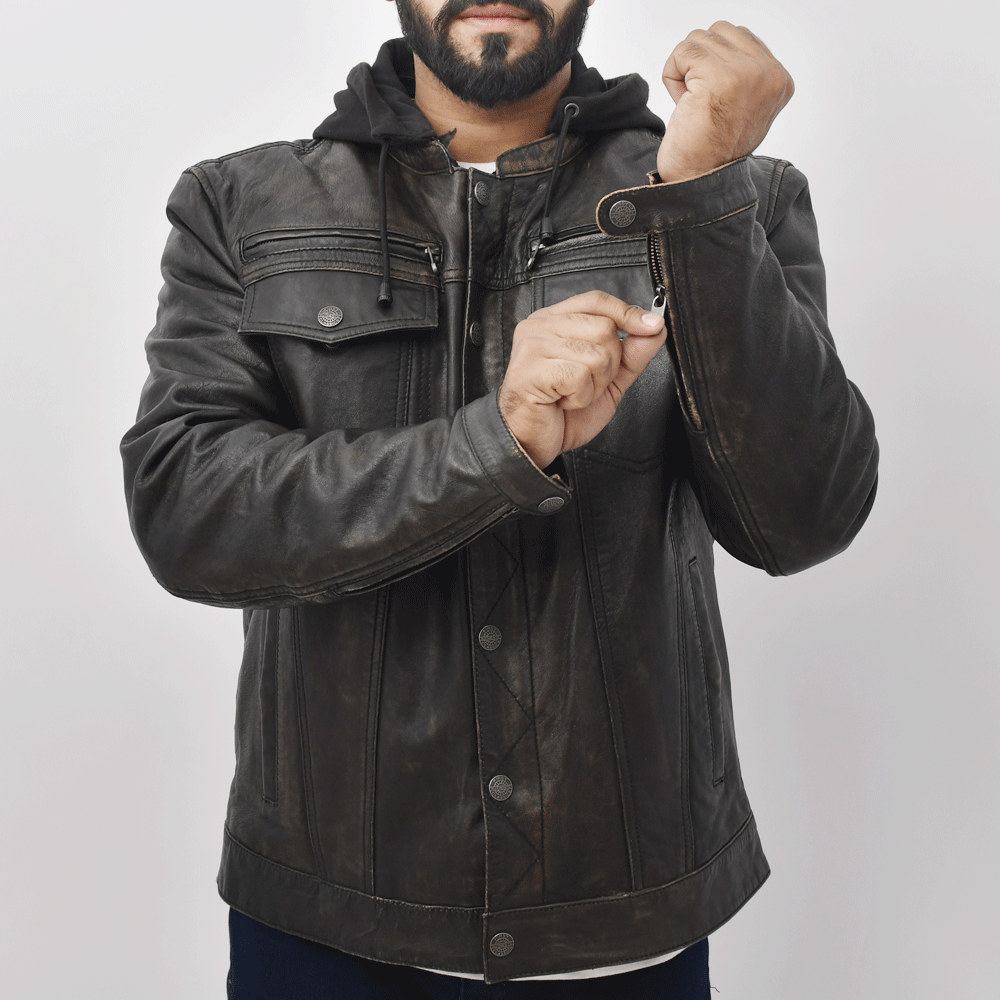
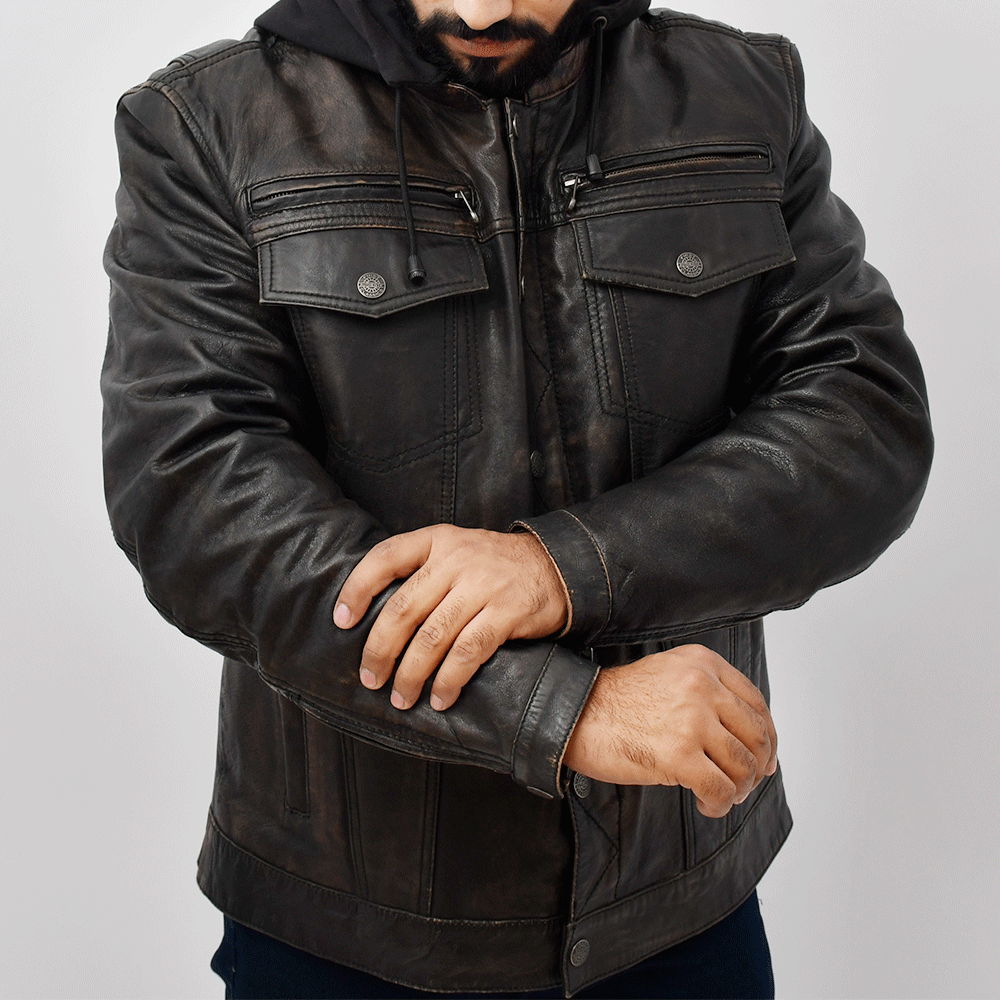
Touring / Adventure Jacket: Touring jackets typically include multiple pockets (exterior and interior), armor pockets throughout, reflective elements for visibility, and often removable waterproof liners. It prioritizes comfort during all-day riding with features like pre-curved sleeves, extended back length, adjustable fit systems, and ventilation options.
-
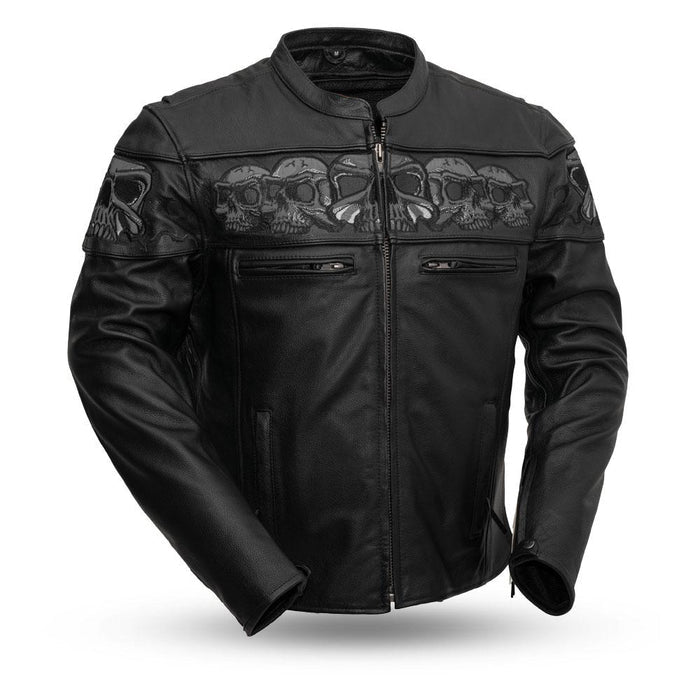
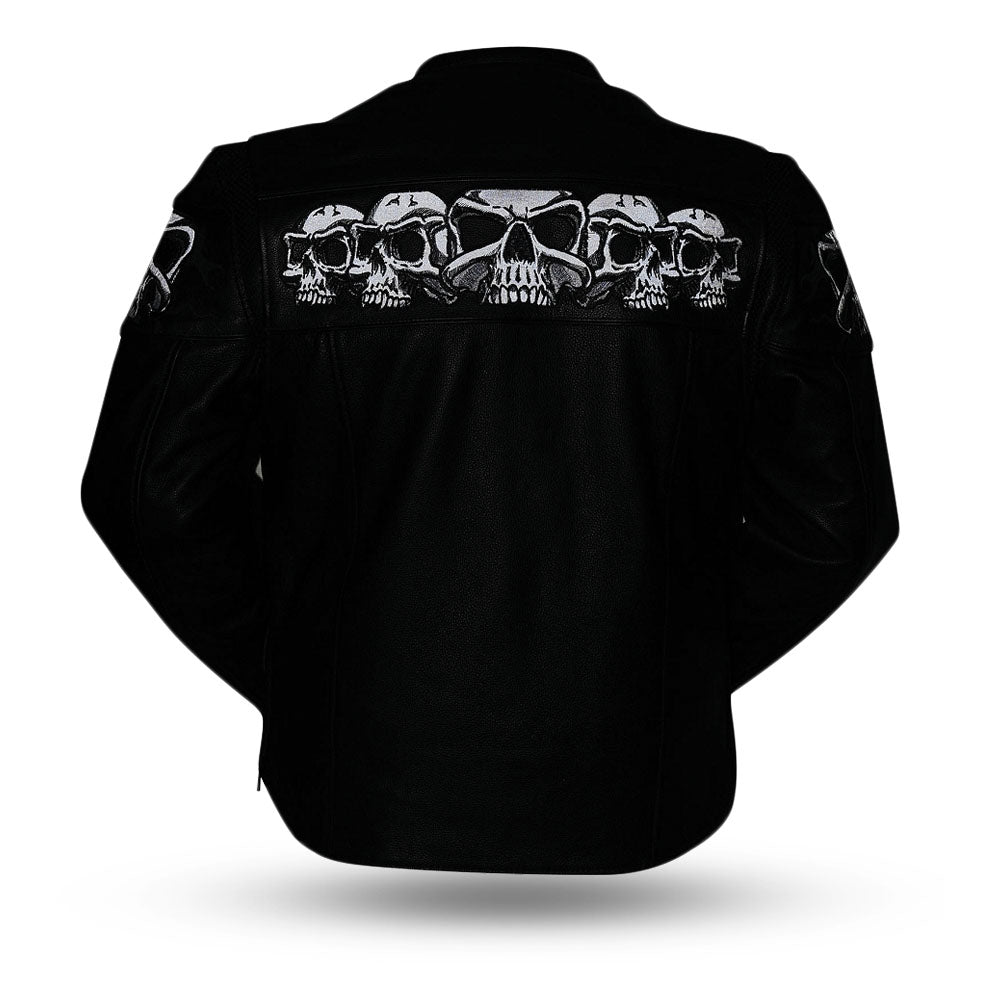
Cruiser Jacket: These jackets offer more room in the shoulders and body, a shorter overall length, and styling that complements American V-twin motorcycles. Features often include fringe details, decorative studs, embroidered designs, or tooled leather accents.
If you want some styling tips for leather jackets, you can read our guide about how to style a leather jacket in routine life and on special events.
Key Features of Our Men’s Leather Motorcycle Jackets
-
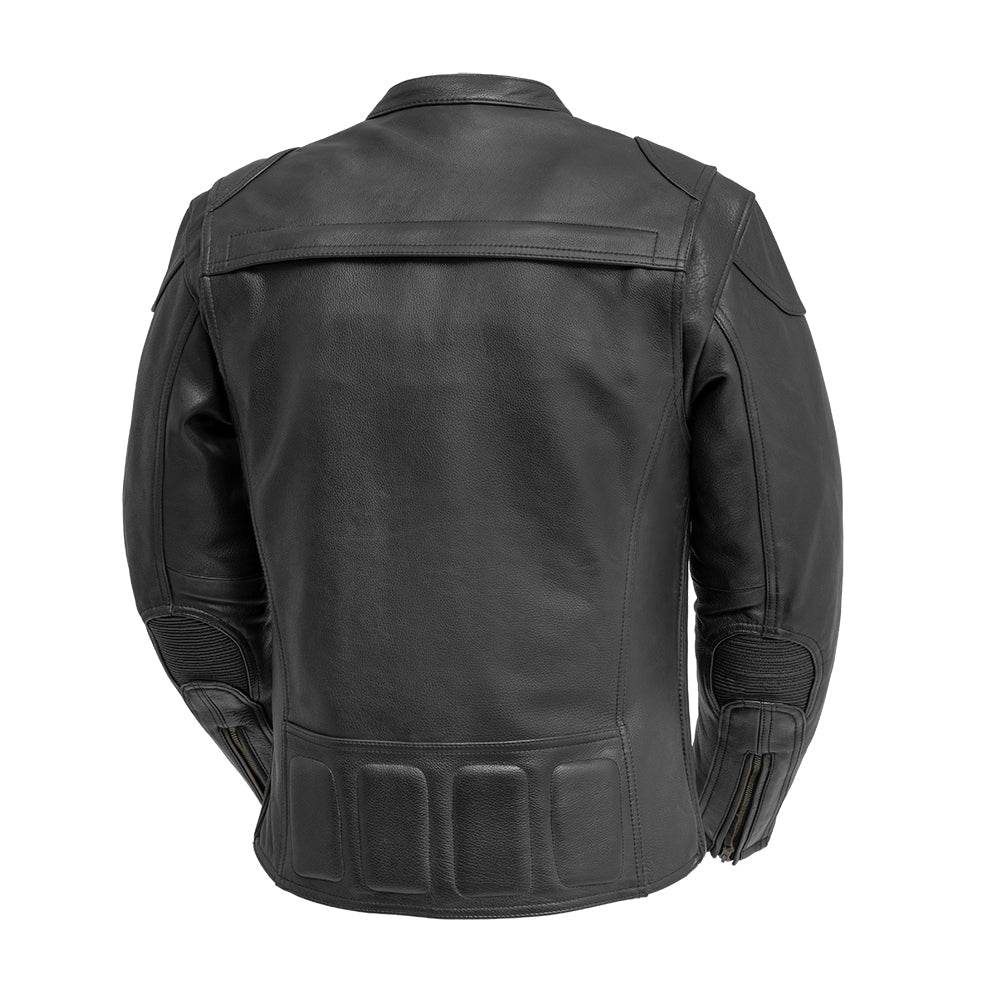
CE-Approved Armor Pockets: Dedicated pockets at shoulders, elbows, and back sized for impact protectors. Some jackets include armor; others provide pockets so you can add your preferred protection. Either way, the pockets must be positioned correctly and secure enough that armor stays in place during impact.
-
Reinforced Stitching: Double or triple rows at shoulders, armholes, zipper lines, and anywhere stress concentrates. Bar tack reinforcement backing up hardware attachment points. These details determine whether seams hold or blow out in a crash.
-
YKK or Quality Zippers: Zippers fail on cheap jackets within months. Quality zippers from YKK or similar manufacturers work smoothly for years, even with daily use and weather exposure. Front zippers need to operate easily even with gloves on.
-
Pre-Curved Sleeves: Arms cut with a natural bend matching your position on handlebars. Straight sleeves bind at the elbows when you reach forward. Pre-curved sleeves eliminate that restriction and reduce fatigue.
-
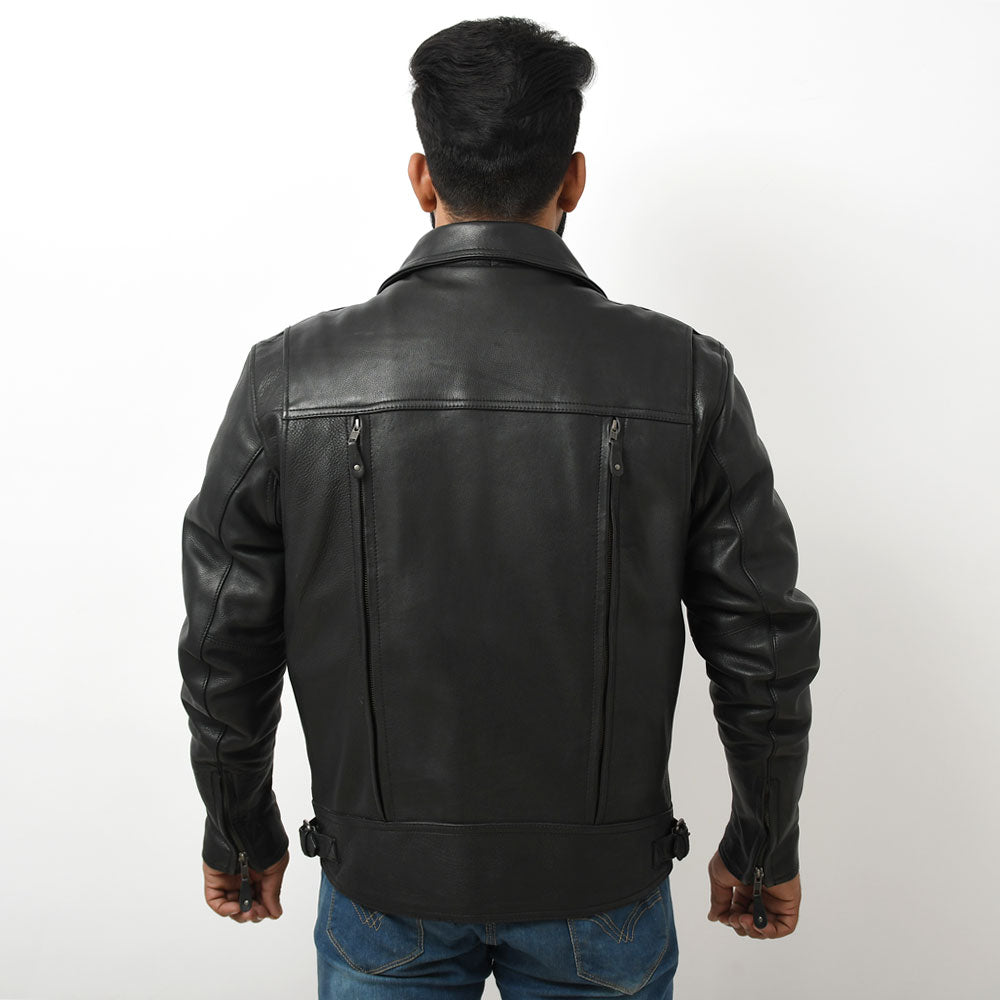
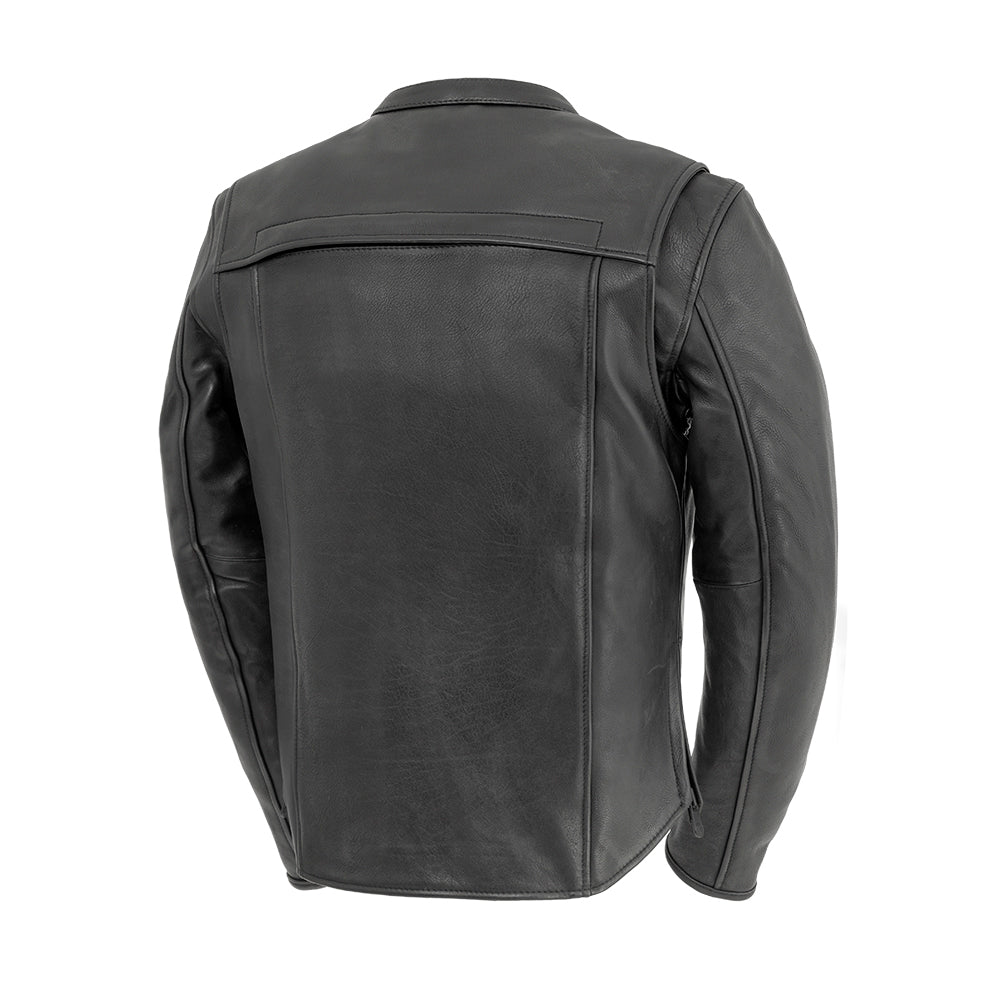
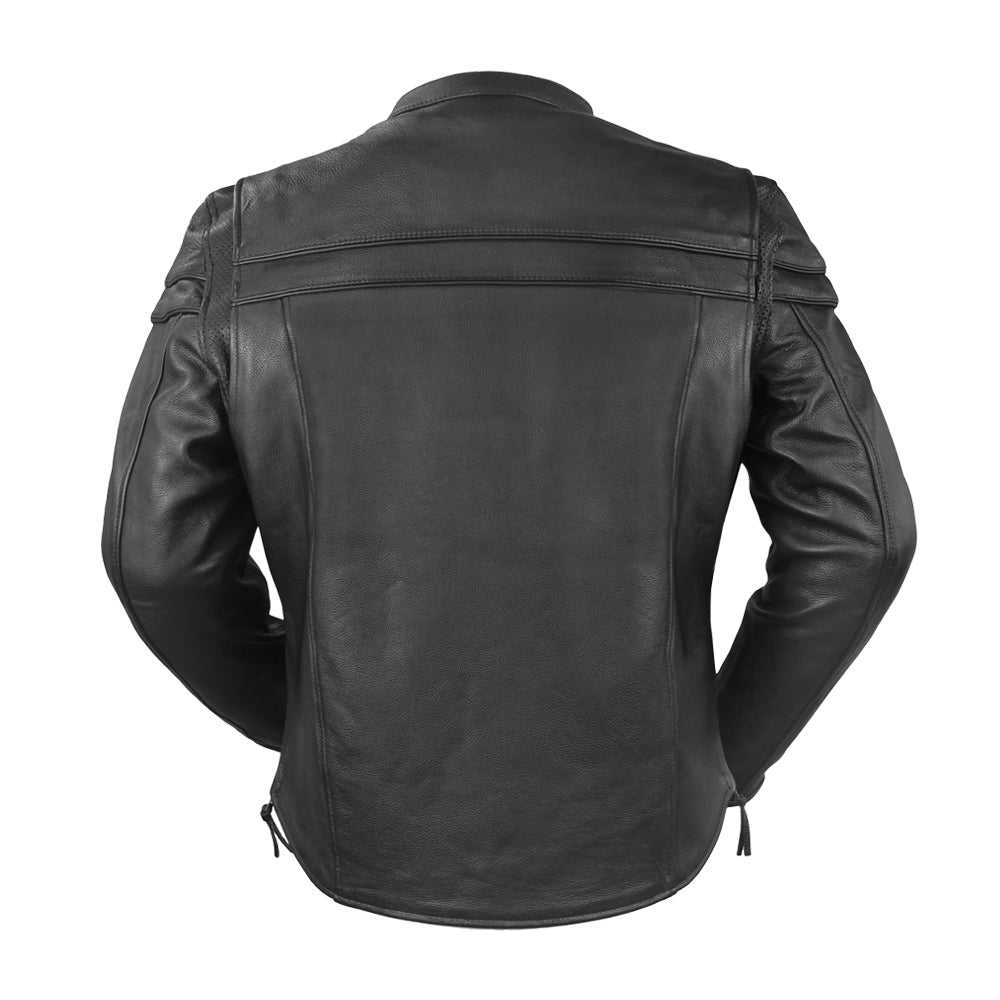
Extended Back Length: Regular jacket length rides up when you lean forward, exposing your lower back to wind and cold.
-
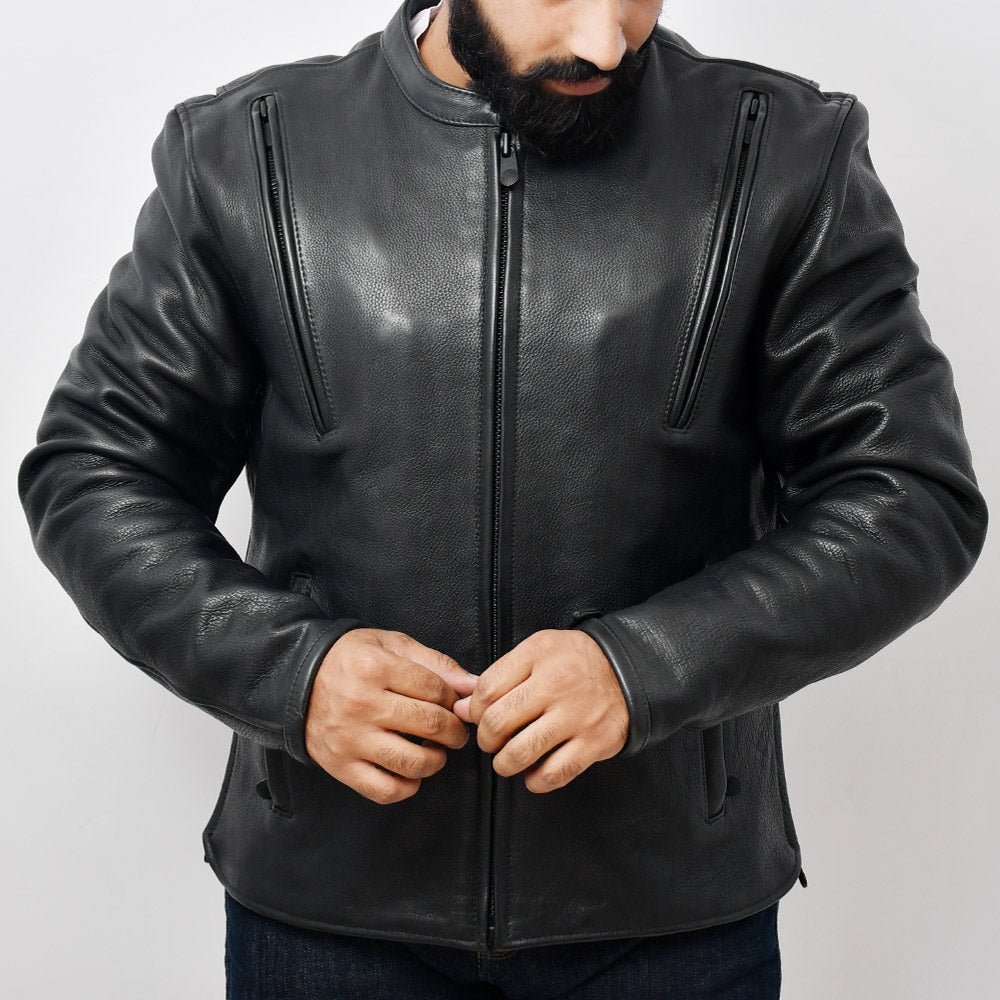
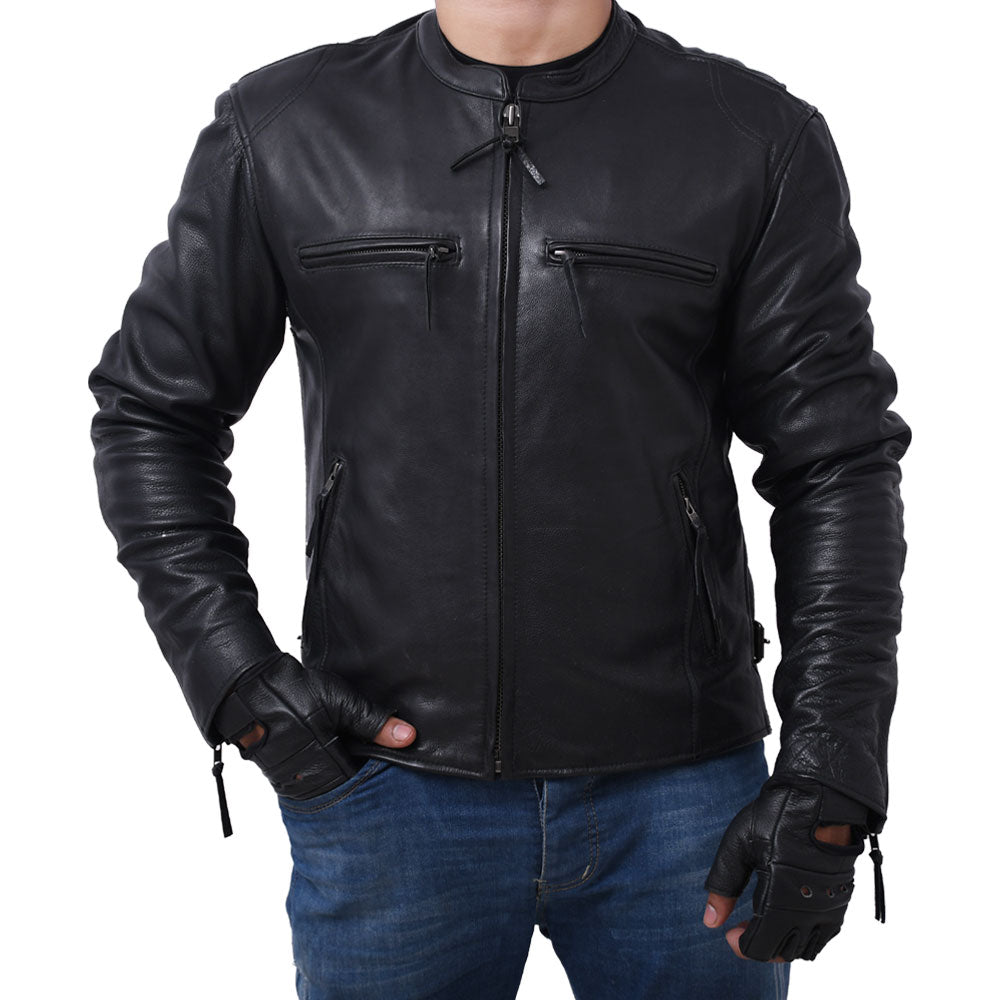
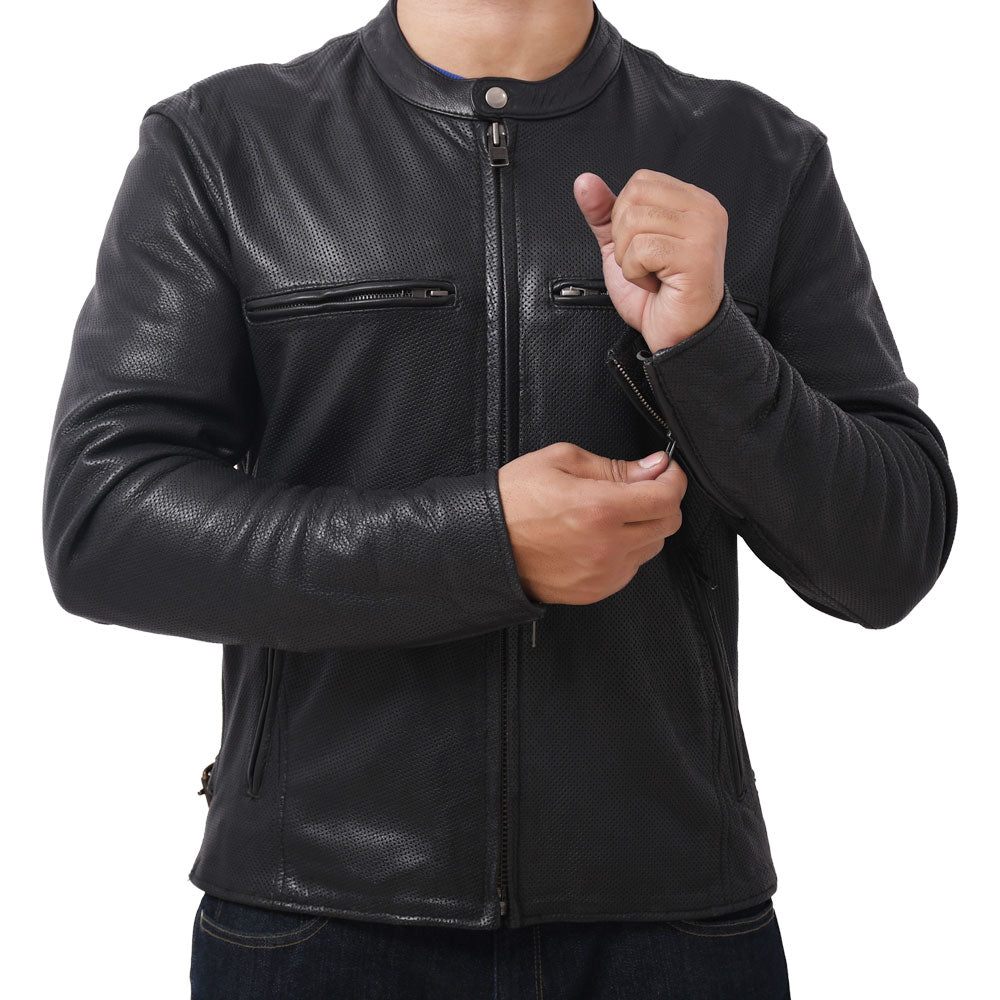
Ventilation Systems: Zippered vents at chest, back, or underarms for summer riding. Perforated leather panels for maximum airflow.
-
Concealed Carry Pockets: Interior pockets designed for firearms with retention systems and easy access.
-
Multiple Storage Options: Exterior pockets for gloves, phone, or quick-access items. Interior pockets for wallet, documents, and valuables.
-
Removable Thermal Liners: Zip-out insulation that converts your jacket from summer to winter use. Quality liners attach securely at multiple points so they don't bunch or shift.
-
Adjustable Fit Systems: Side laces, waist adjusters, cuff adjusters that let you dial in fit over different layers or after the leather breaks in.
-
Action Pleats: Fabric expansion points at shoulders and back that allow full range of motion without pulling
How to Choose Your Perfect Men’s Motorcycle Leather Jacket
Finding the right motorcycle jacket for men means matching it to how you actually ride, not how you think riding should look.
Start With Your Riding Reality
Daily commuters need lightweight, stylish jackets with easy on/off and pockets; armor is optional at city speeds. Weekend warriors and tourers require armor pockets, quality construction, and comfort features, with long-distance riders demanding full protection, pre-curved sleeves, ventilation, and weather versatility for multi-day highway trips.
Climate Determines Features
Hot climates need perforated leather with maximum airflow and lighter colors; cold climates demand heavy hides with removable liners and wind seals; and wet climates require water-resistant treatments or waterproof liners.
Fit Check
Shoulders should sit flat at the natural point; chest snug but breathable with room for light layers; and sleeves must cover wrists in riding position (often requiring sizing up for arm length). The back should extend 2-4 inches longer than the front to stay tucked when leaning forward, and the jacket must move with you during a mobility test.
Protection Level
Casual to street riding requires at least a leather jacket with basic or added armor for protection, with a back protector recommended for regular use. For highway, aggressive, or track riding, full protective gear with advanced armor and race-grade leather is essential for high-speed safety.
Care & Leather Jacket Maintenance
Buy cheap, replace often. Buy quality, maintain properly, wear for decades. Here's how leather actually works and some tips you can follow:
-
Wipe your jacket after every ride to remove dust and bugs; for deeper cleaning, use a leather-specific cleaner and air dry, never machine wash or use harsh chemicals.
-
Condition the leather 2–4 times a year to prevent drying and cracking, focusing on high-flex areas like elbows and shoulders.
-
Always store it on a wide hanger in a cool, dry place away from sunlight and heat. Avoid plastic covers and never fold or compress it for long periods.
Read also: How to Clean Leather Jacket Like a Pro
Why Best Leather NY for Your Next Motorcycle Jacket
At Best Leather NY, we stock men's leather motorcycle jackets because riders kept asking us for gear that actually performs. Every jacket in our collection gets vetted for construction quality, feature functionality, and real-world performance. We don't stock fashion leather that falls apart after one season. We don't carry jackets with armor pockets positioned wrong or zippers that fail.
Need a Custom Mens Leather Motorcycle Jacket?
If you want to have a motorcycle leather jacket built specifically for your needs, our custom builder offers complete control in your hands. You can build a men’s custom leather motorcycle jacket and you have options to choose everything from leather color to stitching design, and we build it for you!
Complete Your Riding Setup
A genuine leather biker jacket men's riders depend on is just one piece of the protection puzzle. Complete your gear with essentials such as:
-
Motorcycle Helmets: D.O.T. or Snell-rated head protection that actually fits correctly. Your brain only gets one chance.
-
Riding Gloves: Abrasion-resistant Leather motorcycle gloves with knuckle protection. Your hands hit the pavement first in most crashes.
-
Riding Pants or Chaps: Leather chaps or armored textile pants to protect your legs. Jeans offer almost zero protection in slides.
-
Quality Rain Gear: Because getting caught in storms without it ruins rides and risks hypothermia.
Frequently Asked Questions
What's the difference between a fashion leather jacket and a motorcycle leather jacket?
Fashion leather jackets prioritize style using thinner leather (0.6-0.8mm), basic stitching, and cuts designed for walking. Leather motorcycle jackets for men use thicker leather (1.2-1.4mm minimum), reinforced stitching at stress points, armor pockets, pre-curved sleeves for riding positions, and construction rated for abrasion resistance.
How should a men's leather motorcycle jacket fit for proper protection?
Shoulders must sit flat at your natural shoulder point, this positions armor correctly. The chest should feel snug but allow full breathing and light layering. Sleeves should reach your wrists when your arms are extended in riding position without riding up. The back should extend 2-4 inches longer than the front to stay tucked when leaning forward. Armor should sit flush against impact points, not shift around.
Is cowhide or goatskin leather better for motorcycle jackets?
Cowhide leather offers maximum abrasion resistance and durability, best for highway riding, touring, and maximum protection. It's heavier and requires break-in. Goatskin leather is lighter, more flexible from day one, naturally water-resistant, and still provides good protection.
Can I wear a leather motorcycle jacket in summer?
Yes, with the right features. Perforated leather jackets have machine-punched holes throughout that allow airflow while maintaining protection. Ventilated jackets include zippered vents at the chest, back, and underarms.
Do I really need armor in my motorcycle jacket?
For any riding above 35 mph or on public roads: yes. CE-approved armor at shoulders, elbows, and back absorbs and distributes impact force during crashes, preventing fractures and serious injuries. Even low-speed crashes generate enough force to break bones. Armor is the difference between bruising and compound fractures.
How do I clean and maintain my leather motorcycle jacket?
Wipe down after every ride with a soft, dry cloth. Deep clean monthly using leather-specific cleaner (never household cleaners). Condition 2-4 times per year with quality leather conditioner to prevent drying and cracking. Store on padded hangers in cool, dry locations away from direct sunlight. If wet, air dry naturally; never use direct heat and never machine wash.
What's better for motorcycles: leather or textile jackets?
Leather offers superior abrasion resistance, especially in slides, and wind protection. It lasts longer and looks better with age. Textile jackets often include waterproofing, are lighter weight, are easier to care for, and cost less. For maximum crash protection: leather wins. For all-weather versatility and convenience: textile has advantages.
How much should I spend on a quality motorcycle leather jacket?
Budget $200-$400 for a quality motorcycle jacket men can trust for years. This range offers genuine leather, proper construction, motorcycle-specific features, and often includes armor.
Can leather jackets be repaired if damaged?
Yes, quality leather jackets can be professionally repaired. Torn seams can be re-stitched, failed zippers replaced, damaged leather patches or panels replaced, and even significant damage repaired by skilled leather workers.